Quoc Tuan is listing his two-bedroom apartment in the eastern part of in HCMC. He had bought the VND4.5-billion apartment at the end of 2023 with a bank loan funding 60% of the cost.
The loan interest rate had been 7% in the first year but rose to 11% last October and to 15% earlier this year. His monthly mortgage payment has doubled as a result from VND16 million to VND33 million and become a burden.
 |
|
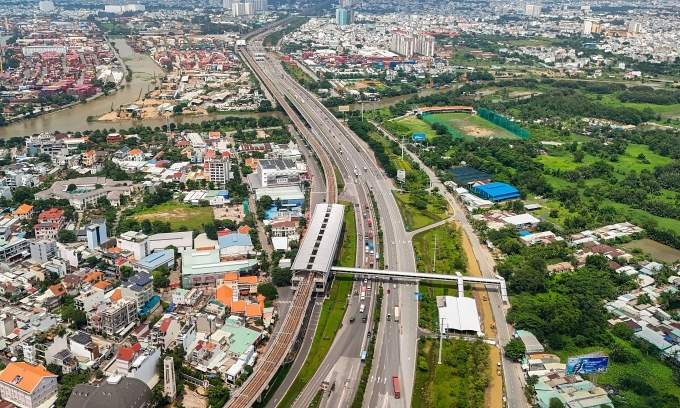
Eastern HCMC in October 2025. Photo by VnExpress/Quynh Tran |
He is now looking to sell the property for VND5 billion, but has difficulty finding a buyer. “If it does not sell, I will have to go down to the original price to avoid further losses.”
Tran Van Phuc, also in HCMC, bought a VND8 billion apartment in early 2025, borrowing 40% from a bank for 20 years.
In the first year he paid around VND34 million a month toward principal and interest when the interest rate was a subsidized 8.5%.
At the end of the subsidy period it switched to a market-based floating rate of 15%, and his monthly payment rose to nearly VND50 million.
He says he risks default if he continues to bear this enormous burden for a few more months. “Even if I have to sell the apartment at cost price or a loss, I will do it.”
Many investors who bought apartments during the low-interest-rate period are facing similar pressure as rates spiral upward.
Brokers say buyers who are willing to pay quickly can get discounts of up to 15% as people seek to sell apartments as soon as possible.
On social media property groups, sellers are bringing prices down by 10–12% compared to listed market levels.
Mortgage interest rates at many banks are currently at 9.5–14%, while floating rates can reach 15–16%.
Data from property portal Batdongsan shows inquiry for property purchases began to decline in the final two months of 2025 as interest rates showed signs of rising, with a drop of 17–20% month-on-month. The trend continued in January, when searches fell by a further 28%.
In a recent note credit rating agency FiinRatings said rising mortgage interest rates have become one of the major risks facing the real estate market.
Mortgages account for a substantial share of the credit portfolios of many banks, most of them given during the low-interest-rate period between 2023 and 2025, when rates remained steady at around 8% for up to 24 months.
When loans shift to floating rates of around 13–15% per year, borrowers’ repayment obligations can increase sharply.
If interest rates remain at these elevated levels for any length of time, the threat of bad debts will loom over the banking system.
Le Quoc Kien, an independent real estate consultant, says financial pressure is most felt by people who borrowed in 2023-2025 as the interest rate subsidy and principal grace period have ended.
The latter means borrowers now also have to pay principal, causing monthly obligations to double.
From a market perspective, Vo Huynh Tuan Kiet, director of residential markets at CBRE Vietnam, says the most affected assets are highly speculative but low-liquidity properties with limited rental cash flow such as resort real estate, condotels, beachfront shophouses, and suburban lands.
Highly leveraged investors who borrowed 50–70% of the property’s value are particularly affected, he points out.
He expects the pressure to intensify in the second half of this year when many loans signed at the end of 2024 enter their floating-rate phase.
This will accelerate a market shakeout, forcing highly leveraged investors to exit and creating opportunities for long-term capital to acquire assets at deep discounts, he adds.