Export volume rose 39.2% to 66,350 tonnes in the same period, according to data from the Vietnam Pepper and Spice Association.
Shipments amounted to 30,638 tonnes worth $199.3 million in March alone, up 119.3% from February and 51.3% year-on-year in value.
Of these, black pepper accounted for 26,190 tonnes worth $167.3 million while white pepper made up 4,448 tonnes worth $32 million.
Export prices remained elevated overall, averaging $6,520 per tonne for black pepper and $8,735 per tonne for white pepper. While black pepper prices slipped slightly by 0.7% month-on-month, white pepper prices edged up 1%.
The U.S. and China maintained their positions as Vietnam’s largest buyers in March, importing 8,059 tonnes and 3,663 tonnes respectively. Exports to the U.S. jumped 121% from the previous month, while shipments to China soared 134.7%. Other markets, including Egypt, the Netherlands, Canada and the Philippines, also posted triple-digit month-on-month growth.
 |
|
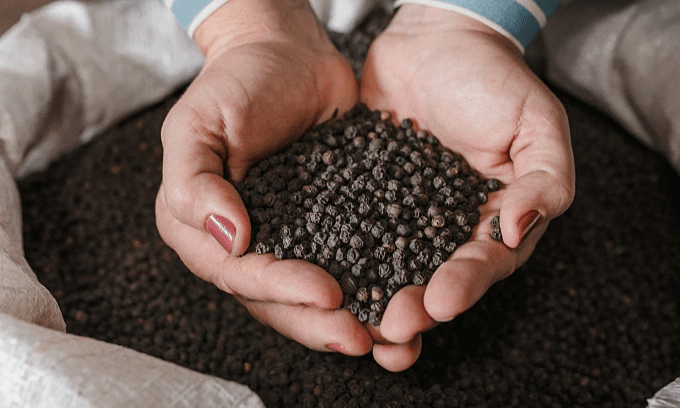
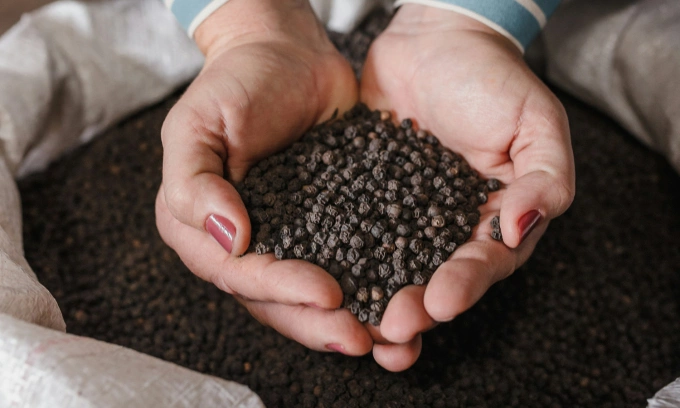
A person holds black pepper. Photo by Unsplash/Vitor Monthay |
Vietnam also recorded a sharp rise in pepper imports as businesses boosted purchases for processing and re-export amid tightening domestic supply. March imports reached 10,313 tonnes, up 66.2% from February and 108.8% year-on-year. In the first three months, imports totaled 21,201 tonnes valued at $121 million, a year-on-year increase of 118.9%.
Cambodia remained Vietnam’s largest supplier, accounting for 55.1% of imports, followed by Brazil and Indonesia.
Despite strong export results, the association warned of growing supply-demand imbalances. The 2026 harvest is projected at 170,000–180,000 tonnes, down 15–20% from the previous crop due to unfavorable weather and ageing plantations. Tight supply has pushed domestic pepper prices to around VND140,000–150,000 (US$5.32-5.69) per kilogram.
Replanting efforts remain limited as farmers shift toward higher-value crops and land availability shrinks. Globally, pepper output is expected to reach about 530,000 tonnes this year, slightly higher than in 2025 but still below 2024 levels, while demand remains strong.
Meanwhile, exporters are grappling with mounting logistics pressures linked to escalating tensions in the Middle East, which have driven shipping costs up three to four times. The closure of the Strait of Hormuz to commercial container traffic has disrupted major shipping routes, forcing carriers to suspend operations and causing severe congestion at key transshipment hubs such as Jebel Ali and ports in Bahrain and Oman.
With the Middle East accounting for roughly 15% of Vietnam’s pepper export turnover and serving as a vital logistics gateway, some exporters have temporarily halted new orders to minimize risks related to rising costs and delivery delays. Prolonged disruptions could weigh on the sector’s export growth outlook for 2026.