Supported by expanding transport infrastructure and an investor-oriented policy environment, the province continues to position itself as a key destination for FDI enterprises.
 |
|
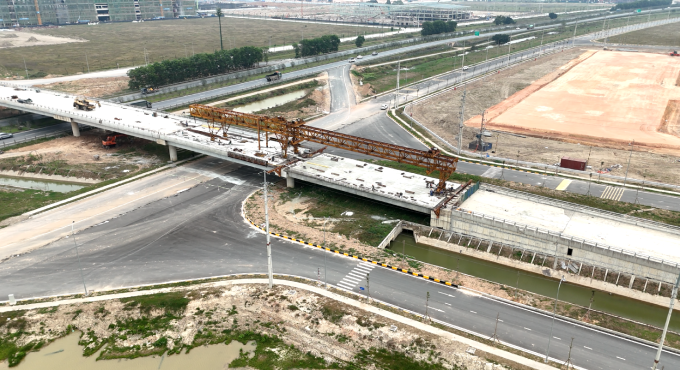
The new National Highway 3 overpass (Hanoi-Thai Nguyen Expressway) connects the Yen Phong II-A industrial park with neighboring industrial parks in Bac Ninh. Photo courtesy of Western Pacific Group |
Over the years, Bac Ninh has stood out not only for the scale of registered capital but also for the profile of investment inflows, with the presence of global corporations in electronics, high-tech manufacturing and supporting industries. As Vietnam integrates further into global supply chains, the province is increasingly viewed as a strategic manufacturing base in northern Vietnam.
According to data from the General Statistics Office of Vietnam, Bac Ninh has consistently ranked among the country’s leading provinces in attracting FDI in high-tech sectors such as electronics, semiconductors and precision components.
An established industrial ecosystem, a sizeable skilled workforce and an administrative framework aimed at transparency have contributed to the province’s competitive position within the Northern Key Economic Region.
Beyond these structural advantages, transport connectivity in the Hanoi metropolitan area has been a major factor shaping investment decisions. The Ring Road 4 – Capital Region project is being accelerated and is expected to serve as a strategic corridor linking Bac Ninh with Hanoi and Hung Yen, as well as major gateways including Noi Bai International Airport and Hai Phong Port. Improved connectivity is projected to shorten travel times and reduce logistics costs, potentially increasing the attractiveness of industrial parks located along and near the route, particularly for high-tech manufacturing projects with stringent infrastructure requirements.
This development direction aligns with Vietnam’s broader socio-economic strategy following the 14th National Party Congress, which prioritizes selective attraction of high-tech and core technology sectors such as semiconductors, data centers, artificial intelligence and automation, while discouraging labor-intensive or environmentally high-risk projects. These policy orientations place additional requirements on industrial parks, including adequate land availability, clear legal status and sufficient capacity in electricity, water supply and wastewater treatment systems.
However, the availability of large, contiguous industrial land plots in Bac Ninh has become more limited. Many existing industrial parks are near full occupancy or offer only smaller parcels, which may not meet the needs of large-scale projects requiring tens of hectares for expansion.
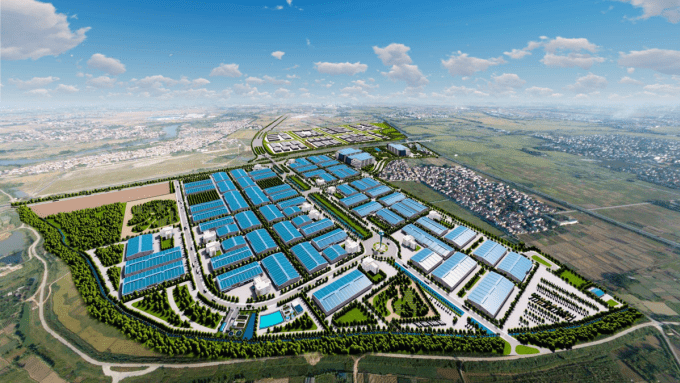
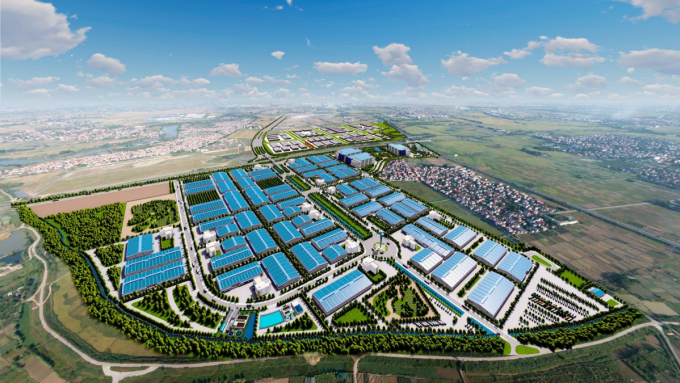
In this context, Yen Phong II-A Industrial Park is among the projects in the Yen Phong area offering approximately 50 hectares of contiguous, cleared land with legal documentation and Land Use Right Certificates available for transfer to investors. Key transport links, including National Highway 18 and the new National Highway 3 overpass connecting the park to surrounding industrial zones, have been completed ahead of the 2026 Lunar New Year, enhancing regional connectivity.
 |
|
Yen Phong II-A Industrial Park, Bac Ninh Province. Photo courtesy of Western Pacific Group |
As part of the broader logistics and industrial cluster ecosystem, Yen Phong II-A Industrial Park has been developed with integrated infrastructure. According to the investment department of Western Pacific Group, the project has been approved with a power supply capacity of 199.2 MVA, reportedly higher than that of several neighboring industrial parks. This capacity is designed to meet the operational needs of high-tech manufacturing projects that require stable and high-volume electricity supply.
With continued improvements in infrastructure and policy clarity at both central and local levels, Bac Ninh is entering a new phase of industrial development. Its industrial parks are expected to remain key components in attracting FDI and supporting the expansion of high-technology manufacturing in Vietnam.