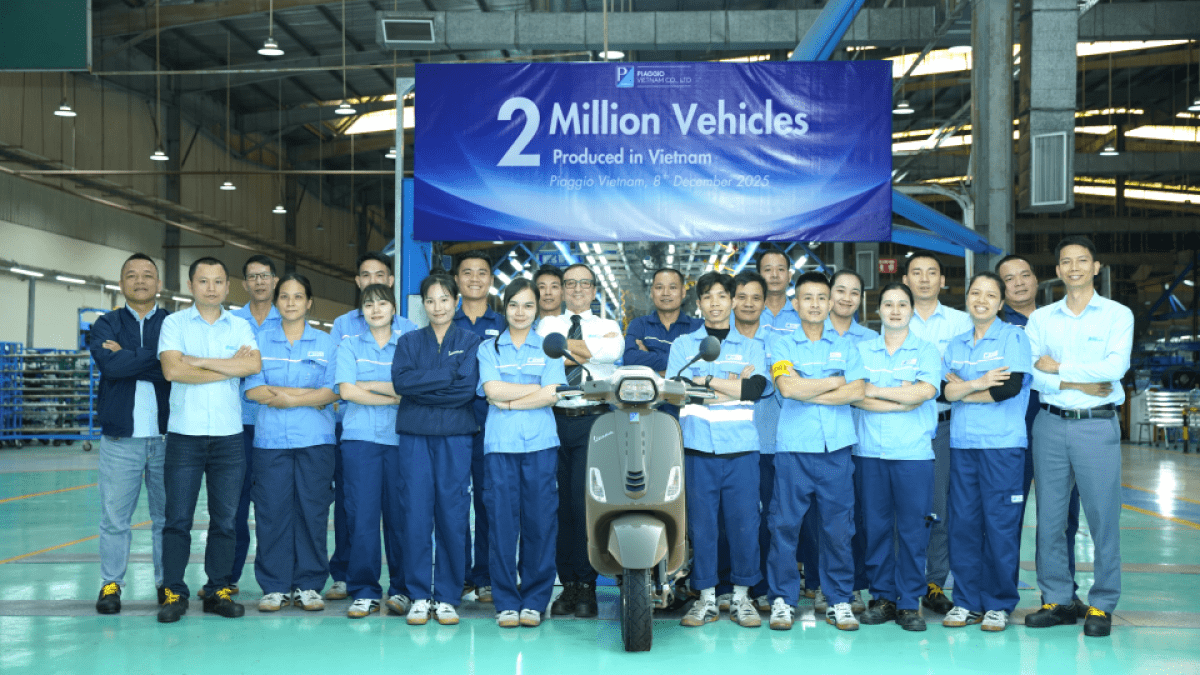
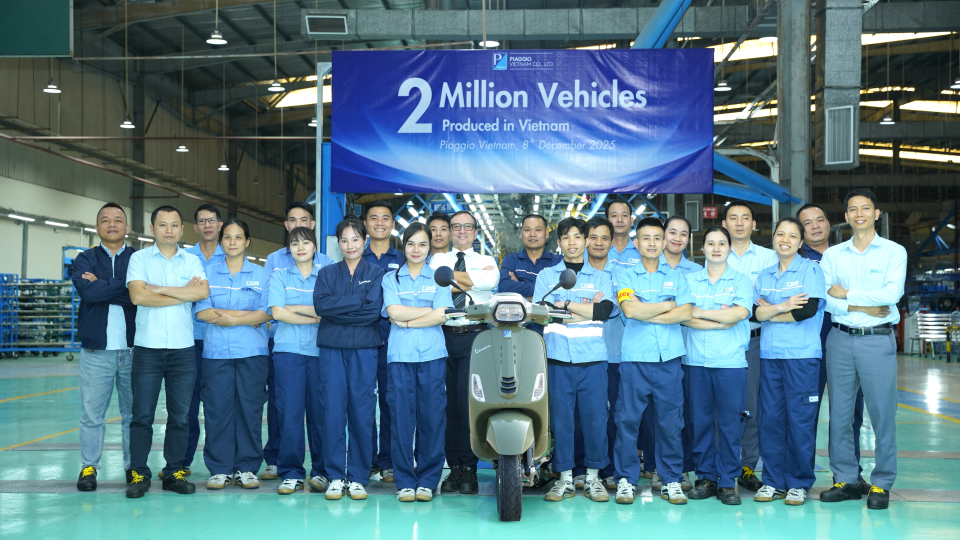
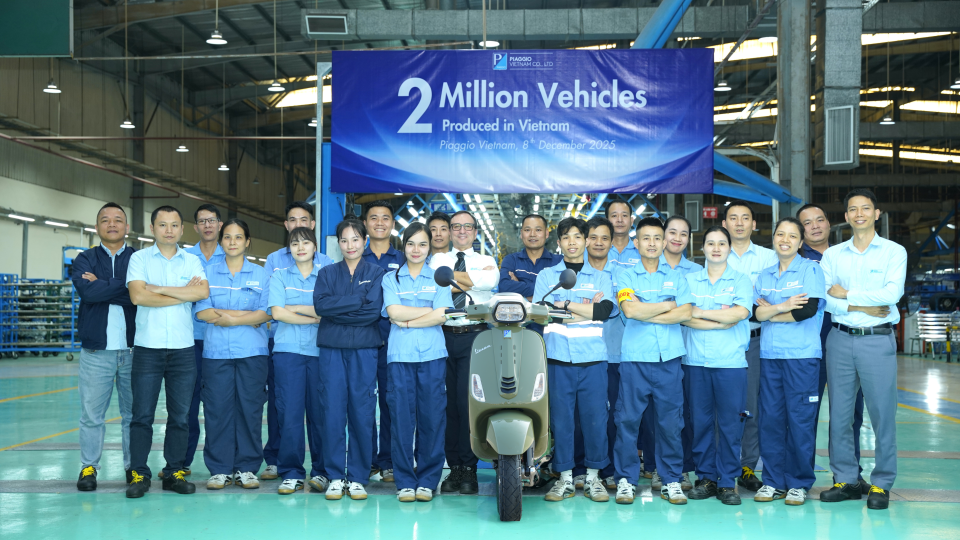
The Piaggio Phu Tho Factory in December reached the two-million-unit production milestone, following six years of significant increased production capacity. The first one million vehicles were produced 10 years (2009-2019). The production acceleration since then reflects the continuous enhancement of manufacturing capabilities at the Phu Tho complex, reinforcing its pivotal role within Piaggio’s global production and distribution ecosystem for scooters, engines, and spare parts under the Piaggio, Vespa, and Aprilia brands.
From this base, the factory effectively serves demand for scooters, engines, and spare parts under the Piaggio, Vespa, and Aprilia brands, across strategic markets in the Asia-Pacific region, as well as selected European and American markets.
The 2-millionth vehicle milestone is not merely a quantitative production figure, but the result of a broader value-chain shift towards Asia, positioning Vietnam as a key pillar within Piaggio’s global manufacturing ecosystem.
 |
Long-term strategy
Within the broader macroeconomic landscape, the stability and high predictability of Vietnam’s policy environment have served as a strategic anchor for Piaggio’s long-term investment decisions. For a capital-intensive industry with extended investment cycles, corporate confidence is reinforced by a consistent political and economic framework.
Since establishing its presence in Phu Tho (formerly Vinh Phuc province) in 2007 as a wholly foreign-invested enterprise, Piaggio has demonstrated a sustained commitment to developing local capabilities.
This stability has provided a solid foundation for Piaggio Group’s consistent execution of an operating philosophy built around four core values: paying attention to individuals, importance of quality, long-term vision, and devotion to customers. Rather than adopting a short-term cost-optimisation mindset in response to market volatility, Piaggio has pursued a pioneering the introduction of advanced technologies, introducing pioneering solutions such as anti-lock braking systems and next-generation iGet engines.
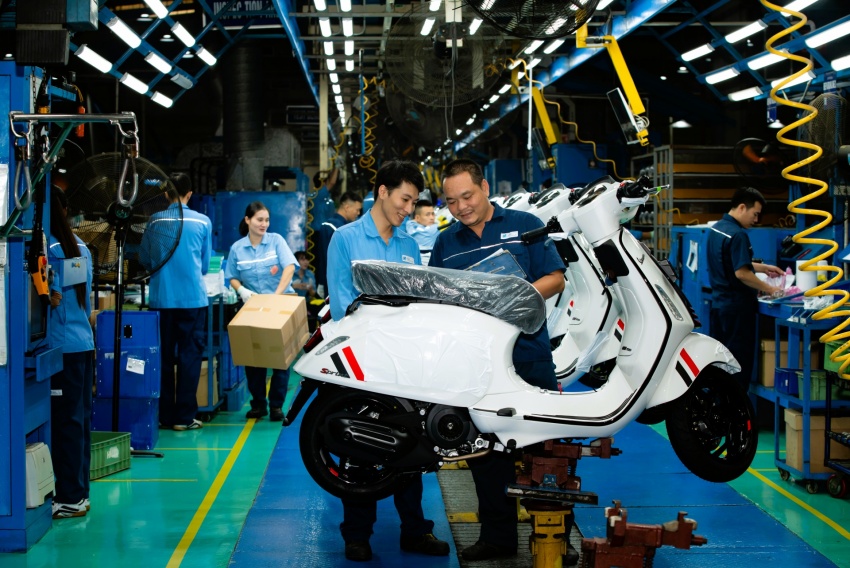 |
Piaggio’s growing manufacturing capabilities are further reflected in the continuous expansion of its production scale, including the granting of a new investment certificate for the Phu Tho factory. The expansion is focusing on increasing the scale of annual production capacity to 400,000 units/ per year. Today, the Vietnam complex is widely regarded as one of the Group’s key operational and research and development (R&D) centres globally.
Piaggio’s investment efficiency is a vivid testament to the success of the government’s consistent and flexible foreign investment attraction strategy. While the mid-term orientations of the Investment Law create a reliable business environment, substantive support mechanisms.
Global standards
The two-millionth vehicle milestone serves as tangible evidence that production operations in Vietnam meet the stringent standards associated with Piaggio Group’s 141-year heritage. It reflects the integration of Italian craftsmanship, advanced technology, rigorous quality assurance, and the human factor.
Each vehicle represents a balance between Italian technology, engineering and the human touch and emotions of the Vietnamese workforce, contributing to Piaggio’s differentiated positioning in the global two-wheeler industry.
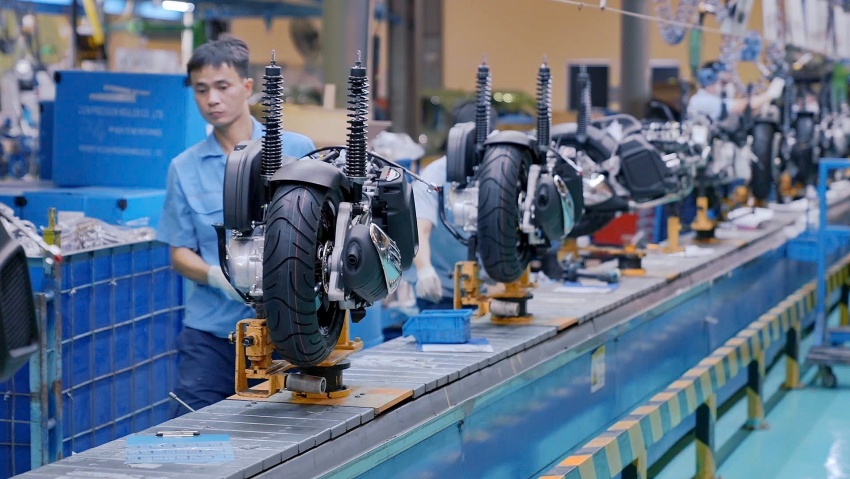 |
In Vietnam, Piaggio operates a full-capacity assembling plant, an advanced engine production plant, and the only Southeast Asian-based R&D centre, reinforcing the country’s role within the group’s regional innovation network. Through an integrated production model and increasing process digitalisation, the group has enhanced operational efficiency and supply-chain management.
As a result, Piaggio’s highlighted “Made in Vietnam” product lines, including the Vespa, Piaggio, and Aprilia brands preserve Italian design language and comply with stringent emission standards from Euro 3 to Euro 5+, and other local requirements, serving both domestic and international markets.
From a supply chain management perspective, Piaggio’s strategy has created a significant qualitative shift for the local supporting industry. Investing in an advanced engine production plant, and the only Southeast Asian-based R&D centre not only increases the localisation rate but also directly pulls Vietnamese satellite businesses deeper into the global value network. This is a major leap from pure assembly to technological autonomy and product development, helping to shorten time-to-market and increasing agility in meeting the diverse needs of international markets.
Supply chain strategy
On the regional investment landscape, Vietnam has increasingly been viewed as its second home and a key node for supply-chain resilience in Asia-Pacific.
The group’s strategy has shifted powerfully: from market exploitation to building operational autonomy, ensuring business continuity amid a volatile global economy. The manufacturing base in Vietnam supports operations across more than 13 Asia-Pacific markets. In this context, human capital remains a critical enabler, with the Vietnamese workforce recognised for its adaptability and ability to operate complex, high-standard manufacturing processes.
 |
Notably, Piaggio Vietnam achieving Authorised Economic Operator certification represents an important regulatory milestone, facilitating more efficient customs procedures and enhancing supply-chain security. This recognition enables the factory to allocate resources more flexibly while meeting export requirements for demanding markets in Europe and the Americas, further reinforcing Vietnam’s role as Piaggio’s regional operational hub in Asia-Pacific.
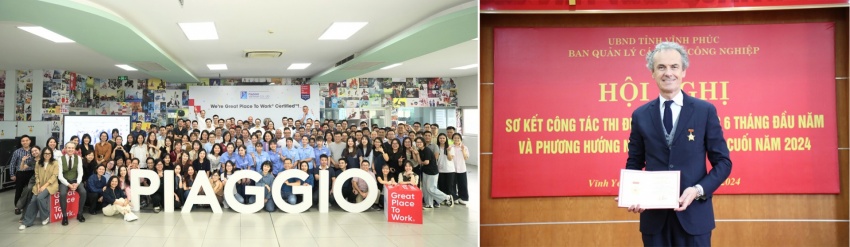
Piaggio has also ensured sustained investment in building a people-centric corporate culture. Piaggio considers its people as its key factor and the “fifth iconic brand” alongside Vespa, Piaggio, Aprilia, and Moto Guzzi. The dedication, devotion, and commitment across Piaggio Vietnam stakeholders have been fundamental to the company’s achievements to date.
Piaggio Vietnam also contributes to the local community through manufacturing activities, job creation and social responsibility initiatives. These efforts have been recognised through numerous awards, including the Great Place To Work 2025, HR Asia’s “Best Companies to Work for in Asia” for six consecutive years, and being honoured with the Golden Dragon Award for outstanding foreign-invested enterprise on four occasions.
Seen in this light, the two-million-unit production milestone is deemed a marker of a fully functioning industrial ecosystem in Vietnam, spanning policy, people, technology and supply chains. It provides a solid foundation for Piaggio to continue pursuing a proven strategy, anchoring its Asia-Pacific operations in Vietnam while serving both domestic and international markets under unified quality standards.
On this journey, every Piaggio product rolling off the Phu Tho production line carries the Italian spirit of design and innovation, and also Vietnamese pride – the pride of a country steadily asserting itself as an important industrial centre of the Asia-Pacific region.
 |
Piaggio Vietnam unveils its new ‘made-in-Vietnam’ Vespa models
As Piaggio Vietnam unveils its 2025 Primavera and Sprint models in Vietnam, it reflects on a legacy of passion and purpose driven by the belief that mobility is not just movement, but expression. |
 |
Piaggio Vietnam participates in ASEAN-Italy economic summit
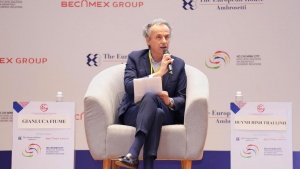
Piaggio Vietnam participated in the 9th High–Level Dialogue on ASEAN–Italy Economic Relations to strengthen economic and strategic partnerships between ASEAN countries and Italy. |
 |
Piaggio Vietnam celebrates milestone of two million vehicles produced at Phu Tho factory
Piaggio Vietnam on December 8 announced the production of its two millionth vehicle at the Piaggio Phu Tho factory (formerly Vinh Phuc province), marking a significant achievement in the company’s 18-year journey in Vietnam. |