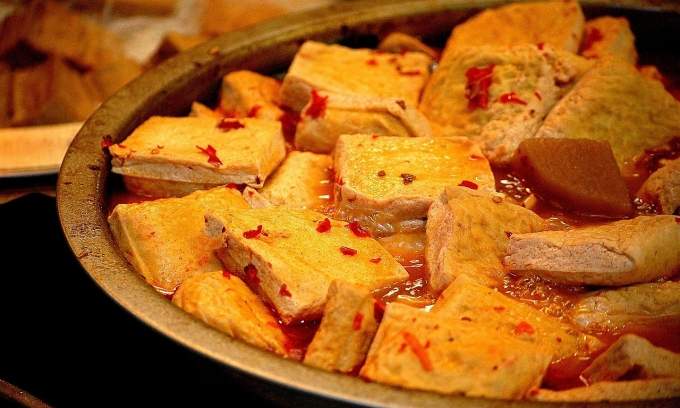
Stinky tofu is no longer served at Golden Leaf in San Gabriel but the owner David Liao and his family are working to reinstate the dish, widely enjoyed across mainland China, Hong Kong and Taiwan for its distinctive smell, according to Tribune News Service.
 |
|
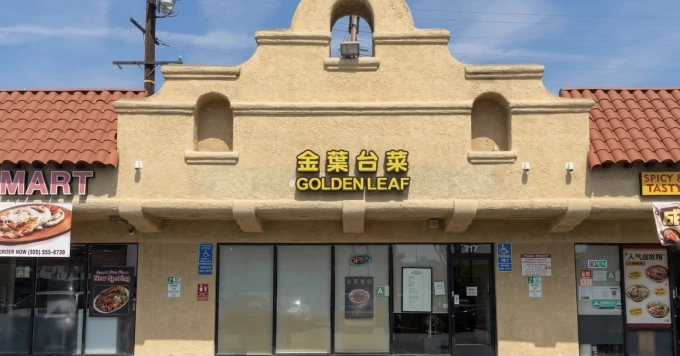
Golden Leaf restaurant in Los Angeles, U.S. Photo by Google Maps/Lucky Chuck |
“The scene of stinky tofu in Taiwanese night markets is an invitation to community and tradition,” owner David Liao said, adding that the dish is “a cherished taste of home and a source of cultural pride.”
Across the San Gabriel Valley, several restaurants continue to offer the dish, typically deep-frying tofu cubes to create a crispy exterior and a porous, sponge-like interior. Its flavor and scent can vary from mild to intensely pungent, often compared to strong blue cheese or well-fermented kimchi.
For three years, stinky tofu was Golden Leaf’s signature item until a neighbour objected to the smell. In the autumn of 2017, a resident living north of the restaurant began lodging complaints.
“She said she could smell the stinky tofu, but we and other customers couldn’t smell it,” said Liao, whose parents opened Golden Leaf in 2014.
Puzzled by the claims, the family canvassed nearby residential streets and neighboring businesses, asking whether anyone else could detect the odor.
“If our commercial neighbors complained to us that it’s affecting their business, then we would understand,” Liao said. “But no one ever has.”
Despite this, inspections by the health department, fire department and a city official followed. Liao said he was ultimately instructed to either control the smell or stop selling the dish.
Although Golden Leaf’s menu includes a variety of Taiwanese staples, stinky tofu generated between 10% and 20% of total revenue, making it difficult for the family to discontinue.
The restaurant initially continued selling the dish as complaints persisted. In September 2017, city authorities issued a violation notice citing a breach of municipal code, with potential fines of up to US$1,200. Liao’s parents subsequently removed stinky tofu from the menu,
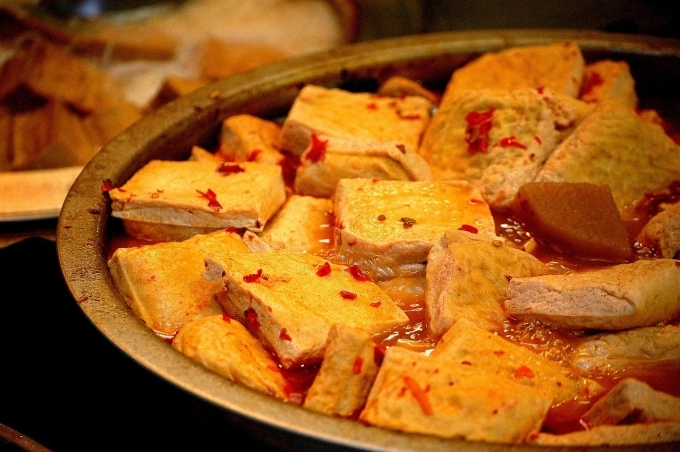
Stinky tofu’s odor is central to its appeal for enthusiasts. The dish is typically produced by fermenting tofu in a brine with vegetables such as amaranth greens over days, weeks or months. It remains a staple of Taiwan’s night markets.
 |
|
Stinky tofu. Photo by Pixabay/focusonpc |
Los Angeles County hosts the largest Taiwanese population in the United States. “Keeping this unofficial national dish alive is crucial,” Liao said. “For our customers, this isn’t just another menu item; it’s a connection to their roots.”
In 2025, Liao attempted to reintroduce the dish through a newsletter announcing limited weekly releases. However, complaints resumed, and he said repeated calls from the same neighbor disrupted the restaurant’s phone line.
Within three months, the city issued a second formal violation notice.
“The city’s municipal code includes provisions related to odor impacts,” writes David Sanchez, San Gabriel’s community development director, in an email. “When an odor extends beyond a property and creates discomfort for others, it may be considered a violation and addressed accordingly.”
Food writer Clarissa Wei said perceptions of stinky tofu vary widely. “Internationally, and for outsiders, stinky tofu often gets framed as a novelty or even a dare,” she said. “But in Taiwan, and across many parts of Asia, it’s just another comfort food.”
Golden Leaf continued serving the dish until November 2025, accruing multiple citations. Liao said he has paid more than $1,000 in fines.
A Change.org petition launched last summer calling for support to continue selling stinky tofu in San Gabriel has gathered more than 1,000 signatures, with supporters framing the issue as one of cultural inclusion.
“This ban isn’t about public health or quality of life; it’s about whose culture is allowed to exist in public,” one comment reads.
“I think it’s ridiculous,” said Thomas Purscelley, the owner of the nearby Roxy’s Liquor and Mini-Mart, as cited by CBS News.
“David has done a really great job, him and his team, preventing this smell coming out and being a nuisance. I’m right next door. We have never smelled the stinky tofu. I didn’t even know he was smelling it.”
Wei compares stinky tofu to other pungent foods such as natto, kimchi and aged fish, noting that cultural misunderstanding can shape perceptions.
“When foods are labeled obnoxious or adverse, it risks flattening that diversity,” she writes. “Stinky tofu gets a bad rap largely because people, both abroad and even within Taiwan, don’t fully understand how it’s made.”
San Gabriel city council member John Wu said the dispute centers on odor control rather than cultural differences, confirming the city has received multiple complaints. He suggests improved filtration could resolve the issue.
“We don’t stop people from selling dishes because they are smelly, but they should keep the smells inside the unit,” Wu said.
“It’s subjective, and people feel differently about different smells. We can check noise levels at a business, but we don’t have a device that detects how much something smells.”
Wu cited a nearby coffee shop that resolved similar complaints after installing a filtration system.
“This has nothing to do with any cultural things, but it’s more like a food smell control issue,” Wu said. “We have many restaurants selling stinky tofu, but this is so far the only restaurant where we have those complaints from residents.
Other local establishments, including Dong Ting Xian and Yung Ho Cafe, continue to serve stinky tofu. Wu noted that Golden Leaf’s proximity to residential areas may contribute to the issue.
Relocation is not feasible for the restaurant. Liao has explored installing a filtration system or a ventless fryer, estimating costs of $20,000 to $50,000 for the fryer and about $100,000 for filtration, excluding permits.
“With all these options, I was looking for a guarantee,” Liao said. “We were willing to work with the city, but they couldn’t put anything in writing, and we don’t have the money to just invest and see if it works.”
Wu said no such guarantee can be provided.’ “I truly hope he can start selling the dish again,” he said. “We hope the money he spends on a filtration machine will be worth it for him, but we can only offer that this might be a good solution and hope he gets a good result.”