The company said that a “small number” of customers were facing connectivity issues, adding that problems were unrelated to the Monday outage, which affected thousands of users and disrupted essential services in Singapore, including payments, ride-hailing and food delivery, according to The Straits Times.
 |
|
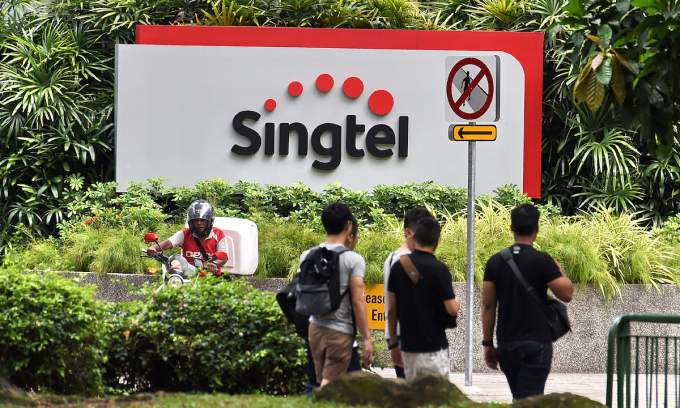
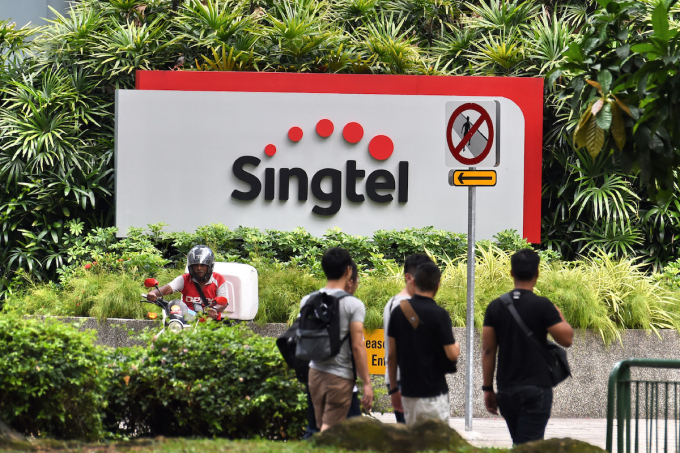
People walk past Singtel logo outside its headquarter building in Singapore on May 12, 2016. Photo by AFP |
Connectivity was restored as of 5 p.m. Tuesday. “We apologize for the inconvenience caused,” Singtel said.
Infocomm Media Development Authority said in a statement that preliminary investigations for both incidents did not suggest any evidence that the incidents were cyber related.
“We take a serious view of any service disruptions and will investigate both incidents. We will not hesitate to take strong regulatory action against Singtel should any lapses be identified,” it added.
The latest disruption followed an earlier incident on Monday, when the telco experienced a network outage lasting more than eight hours, according to Channel News Asia.
Thousands of Singtel users reported problems with their mobile services, with some unable to make payments or use mobile data for work.
Last month, Singapore authorities said all four major telcos had been targeted in a cyberattack by UNC3886. The attack, which was disclosed last year, allowed attackers to access a small number of critical systems at Singtel, M1, StarHub and Simba, although no sensitive customer data was compromised.
However, many Singtel and GOMO users said Tuesday they were still unable to reconnect and were frustrated by slow customer service responses. GOMO is Singtel’s no-frills sub-brand.
Homemaker Priscilla Wee, 56, said she had repeatedly turned her phone on and off and even reloaded her GOMO e-SIM, but without success.
Frustrated, she terminated her GOMO line on March 17 and opened a new account with StarHub. “The trust factor with Singtel is now gone,” she said.
Aaron Ang, chief technology officer of Singapore-based cybersecurity company Cyber Leaders Nexus, said engineers responding to a major outage often restart systems, reroute traffic or implement quick fixes.
Such remedial actions may involve shifting loads to backup systems, similar to diverting traffic to smaller roads after a highway accident.
“Restoring one part of the system can put stress on other parts or expose hidden issues, leading to a second, separate outage,” he said.