Singapore ranked second globally, behind Taiwan, with a Hanke’s Annual Misery Index score of 2.6, Hanke said in an opinion piece on the Fortune. The index measures economic conditions felt by ordinary citizens, with a lower score indicating steadier jobs, controlled prices, affordable credit and rising incomes.
Hanke said Singapore’s position was supported by a tight labor market, with unemployment at 2.0%, inflation at 1.2% and real GDP per capita growth of 4.3%.
Thailand ranked third with a score of 3.1, helped by low inflation and stable employment. Consumer prices fell 0.3%, unemployment stood at 0.8%, and real GDP per capita grew 2.5%.
He attributed Singapore and Thailand’s stable inflation and relatively low borrowing costs to careful management of money supply.
Despite Thailand’s modest GDP growth, declining consumer prices and low unemployment suggest that “the Thai people are not living in a sluggish economy in any sense that touches their daily lives,” he said.
“Stable money begets stable prices, stable prices beget relatively low lending rates, and relatively low lending rates beget the kind of low-unemployment, modestly-growing economy that Thailand has delivered for over a decade,” he said, as quoted by the South China Morning Post.
 |
|
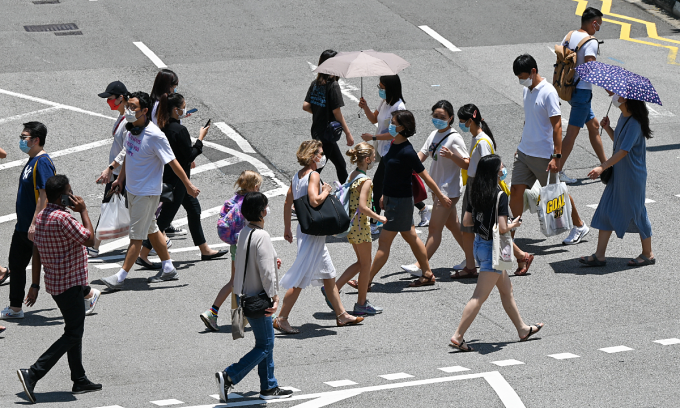
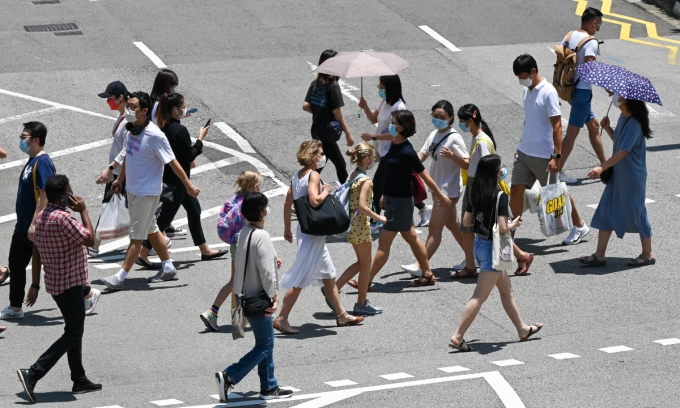
People walk at a pedestrian crossing along the Orchard Road shopping district in Singapore on September 7, 2021. Photo by AFP |
‘Healthy’ Southeast Asia
Other Southeast Asian economies also outperformed larger peers, with Malaysia (167th), Cambodia (163rd) and Vietnam (156th) placing in the lowest quintile of the index.
Hanke noted that the Philippines (131st), Laos (129th) and Indonesia (123rd) also performed well, while conflict-affected Myanmar was an outlier, ranking 14th.
Hanke, who previously served as chief economic adviser to Indonesian president Suharto, described Southeast Asia as “one of the world’s healthiest economic neighbourhoods.”
But he also noted that elevated unemployment and higher bank-lending rates weighed on the Philippines’ outlook, indicating it is “not yet in the company of its better-performing Southeast Asian neighbours.”
Overall, Hanke said the region’s “pragmatic central banking … generally open trade regimes, and high savings rates channelled into productive investment” have underpinned its economic resilience.
Michael Ricafort, chief economist at the Rizal Commercial Banking Corporation, concurred, noting that the Philippines’ dynamic monetary policies and financial stability have supported long-term growth, as cited by the South China Morning Post.
He added that the Philippine economy had been among the fastest-growing globally in recent years, particularly before the pandemic, expanding by at least 6% annually between 2012 and 2019. The country also benefits from a large and youthful population, with an average age below 25.
However, he warned that inflationary pressures could rise if the Strait of Hormuz remains disrupted amid the Gulf conflict.
A March report by the Institute of International Finance identified Thailand and the Philippines, along with India, as among the most vulnerable to rising food and energy costs stemming from the Iran war, due to their heavy reliance on energy imports from the Middle East.
 |
|
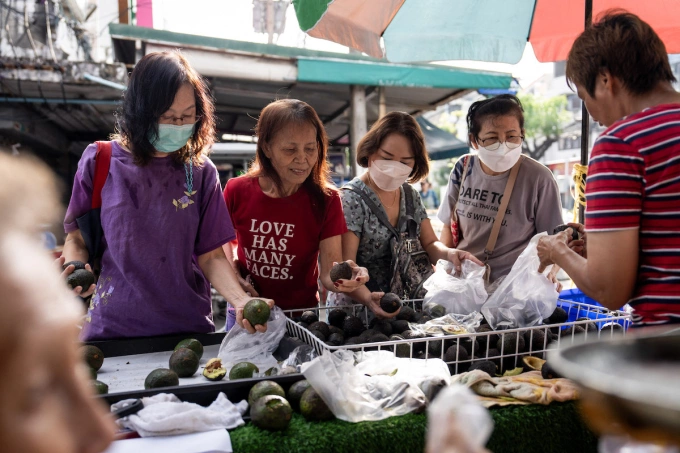
Customers browse avocados at a morning wet market in Bangkok, Thailand, on October 19, 2025. Photo by NurPhoto via AFP |
The HAMI index is calculated using four components: unemployment, inflation and bank-lending rates are added together, while the growth rate of real gross domestic product is subtracted.
A total of 178 economies were assessed, with Venezuela ranking as the most miserable at 556.5. The country recorded the world’s highest inflation rate at 475%, alongside unemployment of 35%.
At the opposite end, Taiwan ranked as the world’s happiest economy with a score of 2.1, driven by strong global demand for semiconductors and artificial intelligence hardware. This pushed real GDP growth per capita to 9.2%, while unemployment, inflation and bank-lending rates remained low.