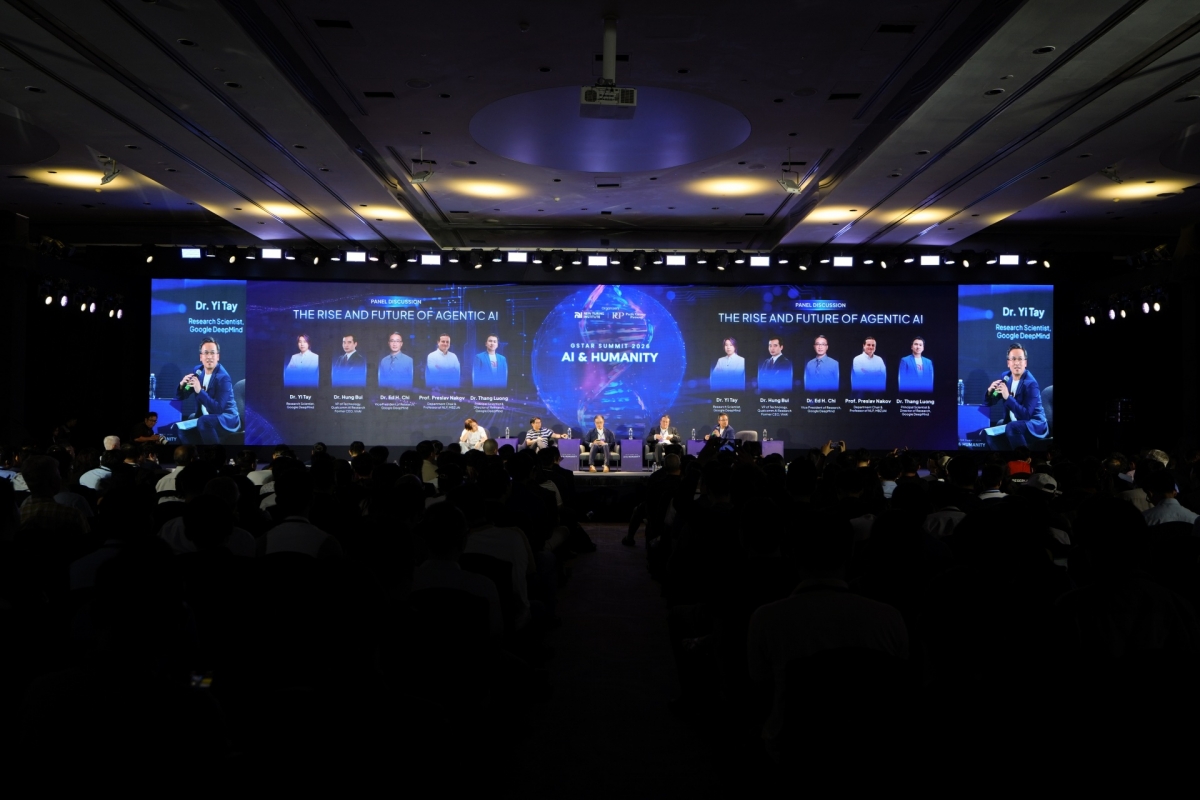
GStar Summit 2026: AI & Humanity took place on May 29, co-organised by the New Turing Institute (NTI) and Pacific Gateway Partners. The event brought together global AI leaders and experts to share innovations, practical applications, and talent development initiatives.
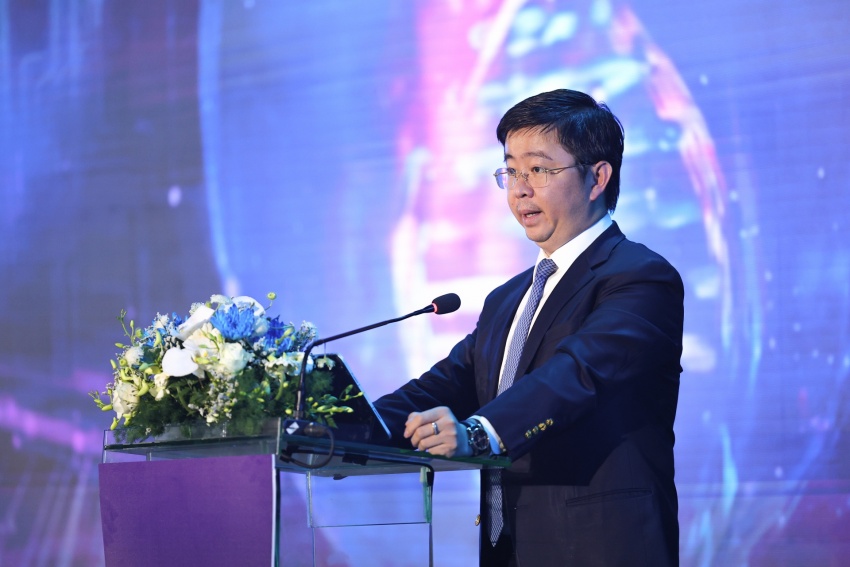 |
| Bui Hoang Phuong, Deputy Minister of Science and Technology |
Speaking at the forum, Bui Hoang Phuong, Deputy Minister of Science and Technology, said that Vietnam identifies sci-tech, innovation, and digital transformation as key drivers to enhance labour productivity, improve growth quality, and strengthen national competitiveness to achieve rapid and sustainable development.
“In this process, digital technologies, particularly AI and big data, have truly become remarkable breakthroughs and play an especially important role. AI has been identified as one of the strategic technologies that Vietnam must master and promote for widespread application across all aspects of socioeconomic life,” he said.
To effectively advance AI, according to Phuong, Vietnam has identified several core priorities, including research and development aimed at achieving technological self-reliance; promoting AI adoption with the key objective of transforming mindsets and improving AI literacy among citizens, businesses, and organisations; strengthening governance and addressing social impacts with a human-centric approach while supporting workforce reskilling and career transition training; and enhancing international cooperation, research sharing, and the development of a common global AI ecosystem.
Thang Luong, principal scientist and director of Research at Google DeepMind and co-founder of NTI, shared his long-standing concerns over the past decade regarding the development of a high-quality AI workforce for Vietnam.
“My biggest aspiration is that by 2030, Vietnam will have 100,000 highly skilled AI engineers. This workforce will become the driving force enabling Vietnam to deploy any technological solution in the world and emerge as a deeptech hub,” Luong told VIR.
“Having a large pool of talented people will help create a peer ecosystem, encouraging overseas Vietnamese talent to return and contribute to the country,” he added.
However, Luong explained that talent alone would not be sufficient to achieve this goal, noting that Vietnam must also prepare other critical foundations, including robust computing infrastructure and a vibrant startup environment.
Modern AI, particularly deep learning, requires enormous processing power from GPUs such as those developed by Nvidia or specialised chips like Tensor Processing Units, which are being utilised by Google. At the same time, Vietnam needs to foster a dynamic startup ecosystem inspired by Silicon Valley, capable of attracting international experts and investors to help build the country’s AI ecosystem.
To achieve the target of 100,000 AI engineers, Luong proposed several new approaches, including a ‘train-the-trainers’ model, under which trainers would be equipped with technological expertise along with the ability to inspire learners and foster human values, such as the joy of helping others.
Secondly, he highlighted the need to train lecturers to utilise AI in creating teaching materials and personalising education. AI can automatically adapt content by providing simpler explanations for beginners or more advanced knowledge for high-performing learners.
Finally, Luong stressed the importance of stronger collaboration from the business community, noting that partnerships with major corporations would help accelerate the realisation of shared goals.
Wendy Nguyen, co-founder and partner of Pacific Gateway Partners, shared insights on national strategy, economic development, and the integration of technology with human capabilities.
Nguyen noted that while Vietnam possesses enormous potential and resources, success will depend on two key factors: a clear national strategy and a strong execution team.
“Vietnam needs top-tier strategic experts to map out a clear roadmap and determine where to begin, rather than spreading resources too thinly across too many areas at once. At the same time, hardcore executors – a combination of strategic thinkers, decisive operators, and technology specialists – will help elevate Vietnam to a new level,” she said.
Nguyen also proposed a ‘special task force’ model, suggesting that instead of simply following the direction of major global players, Vietnam should focus on building small but highly capable teams, similar to how a group of just 50 people at Google was able to launch new and innovative products.
Pacific Gateway Partners aims to strengthen Vietnam’s global connectivity through initiatives such as building alliances among the United States, Japan, South Korea, Taiwan, and Vietnam to leverage shared resources and mutual support. The firm is also seeking to capture ‘early-win’ opportunities by identifying sectors where other countries face supply shortages and positioning Vietnam as a provider, such as in bio-manufacturing to help reduce the dependence of the US, Japan, and South Korea on alternative supply sources.
Technology transfer is another critical objective, according to Nguyen. “Financial investment alone is not enough. Vietnam also needs the ‘fishing rod’, meaning the ability to master technology so that it does not become dependent on or controlled by investors,” she said.
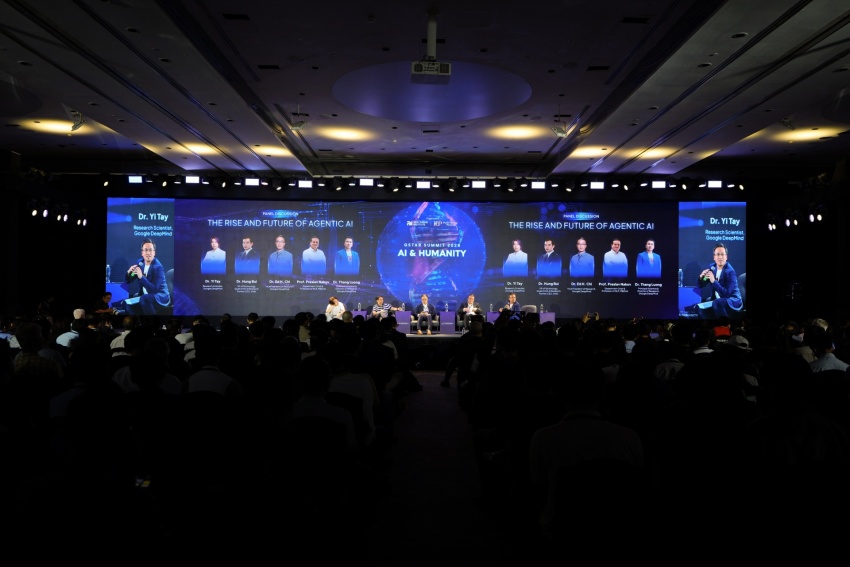 |
As Asia accelerates its AI capabilities, supported by a young and dynamic workforce alongside rising cross-border investment flows, GStar 2026 seeked to strengthen collaboration between businesses and academia across the region.
The event featured speakers and distinguished guests from leading technology corporations, including Google, FPT, Qualcomm, Boryung, and MoMo; prestigious academic institutions such as Carnegie Mellon University (CMU) and Mohamed bin Zayed University of Artificial Intelligence (MBZUAI); as well as pioneering startups including LIFE AI, Calif, Tynapse, and Kotoba Technologies, alongside scientists, innovators, policymakers, and investors.
Beyond academic discussions, the forum focused on advancing practical AI applications and talent development for Vietnam and the Asia-Pacific region more broadly, serving as a strategic bridge connecting businesses, innovators, and investors. The event also featured live demonstrations of notable AI applications in healthcare, fintech, and generative AI.
GStar 2026 continues the series of annual AI events organised by New Turing Institute since 2018 to connect Vietnam’s AI community with global experts. Notable examples include GenAI 2024, which attracted more than 800 participants and featured over 17 prominent speakers, including Jeff Dean, chief scientist of Google, and AI Day 2023, which drew more than 1,300 attendees and over 27 renowned speakers, including Sam Altman, CEO of OpenAI, and Christopher Manning, director of the Artificial Intelligence Laboratory at Stanford University.
 |
Vietnam maintains stable AI outlook in 2026 survey
Vietnam’s AI adoption and public sentiment remained broadly stable in 2026, with the country scoring 58.4 points in the latest WIN World AI Index, compared to 58.5 points a year earlier. |
 |
Vietnam’s digital growth bet
As Vietnam races towards an ambitious double-digit growth target, policymakers and tech leaders are pushing to turn digital transformation, AI and regulatory sandbox reforms from long-term strategy into immediate economic momentum. |
Source:vir.com.vn