Hussein Ibrahim, secretary of Johor Indian Muslim Entrepreneurs Association, said member eateries have kept prices unchanged even though the cost of raw ingredients has risen by 20-30% since March.
“We cannot simply increase our prices as Malaysian consumers are price-sensitive and this may affect our business,” he recently told Malaysian newspaper The Star.
The association has 338 members, including roughly 200 Indian-Muslim eatery operators across Johor, mostly in the city of Johor Bahru, which borders Singapore.
To cope with rising costs, the best move for many operators is to shrink portion sizes instead, Hussein said, adding that price hikes might become unavoidable if the crisis drags on.
 |
|
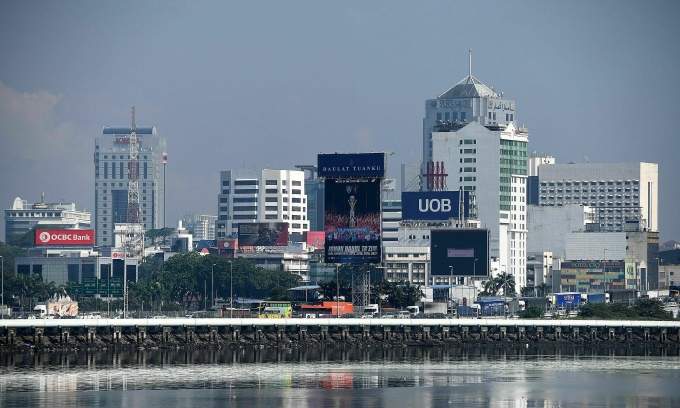
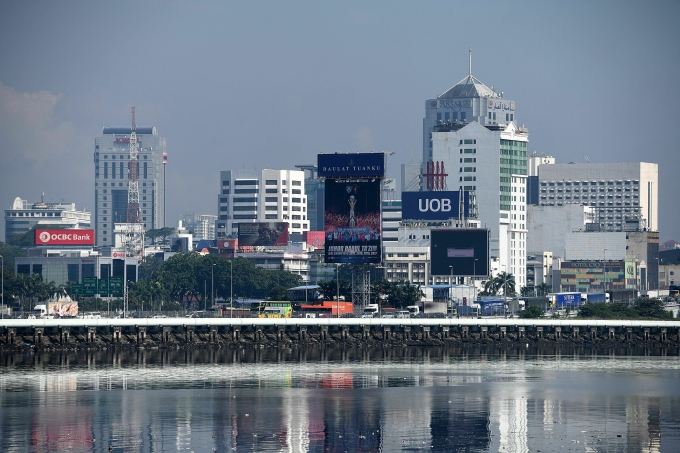
This photo taken on May 4, 2018, shows the skyline of the Malaysian city of Johor Bahru. Photo by AFP |
Roland Lim, president of the Johor Bahru City Businessmen and Traders Association, said its member eateries have similarly maintained their prices.
He noted that eateries in downtown Johor Bahru have been affected by tighter security checks at the Johor–Singapore Causeway, which started earlier this year and have prompted Malaysians who commute to work in Singapore by motorcycle to head straight to immigration checkpoints instead of stopping by for breakfast.
He added that families cutting back on dining out, along with ongoing infrastructure projects and the resulting traffic congestion, have also reduced footfall at these eateries.
Rising food prices
Since the conflict broke out on Feb. 28, food prices in Johor and other parts of Malaysia have increased.
By the end of March, vegetable prices in Johor Bahru had risen by 20-30%, driven by higher transportation costs following diesel price hikes and prolonged hot weather.
More recently, Economy Minister Akmal Nasrullah Mohd Nasir said prices of several food items rose between May 4 and 6 compared with the week before.
These included Indian mackerel, which climbed 3.9% to RM17.42 (US$4.43) per kilogram; white prawns, which were up 1.2% to RM32.11 per kg; and fresh coconut milk, which rose 6.7% to RM16.88 per kg, he said, as quoted by the New Straits Times.
Nonetheless, food prices remained within a manageable range, and some items, such as beef, saw price declines, he said.
Mohamad Sabu, the country’s Agriculture and Food Security Minister, said earlier this month that food supply remains stable but prices could face upward pressure over the next three to six months due to rising production costs, including fertilizer, animal feed and fuel.
“When these costs rise, market prices may also be affected,” he said in a statement cited by The Star.
The Federation of Malaysian Hawkers and Traders Associations had earlier warned that food prices could increase by as much as 50% due to higher fuel costs, according to Bernama.