
The Vietnam Blockchain and Digital Asset Association on March 31 spearheaded an event on shaping Vietnam’s digital future through technology talent.
The event, co-headed by the ABAII Institute of Blockchain and AI, Nam A Commercial Joint Stock Bank, and Ho Chi Minh City University of Industry, event attracted more than 500 students, lecturers, and industry experts.
The global digital asset market has reached $2.54 trillion with more than one billion users, while Vietnam now counts over 17 million participants, underscoring an urgent need for a workforce equipped with both technological capabilities and compliance expertise.
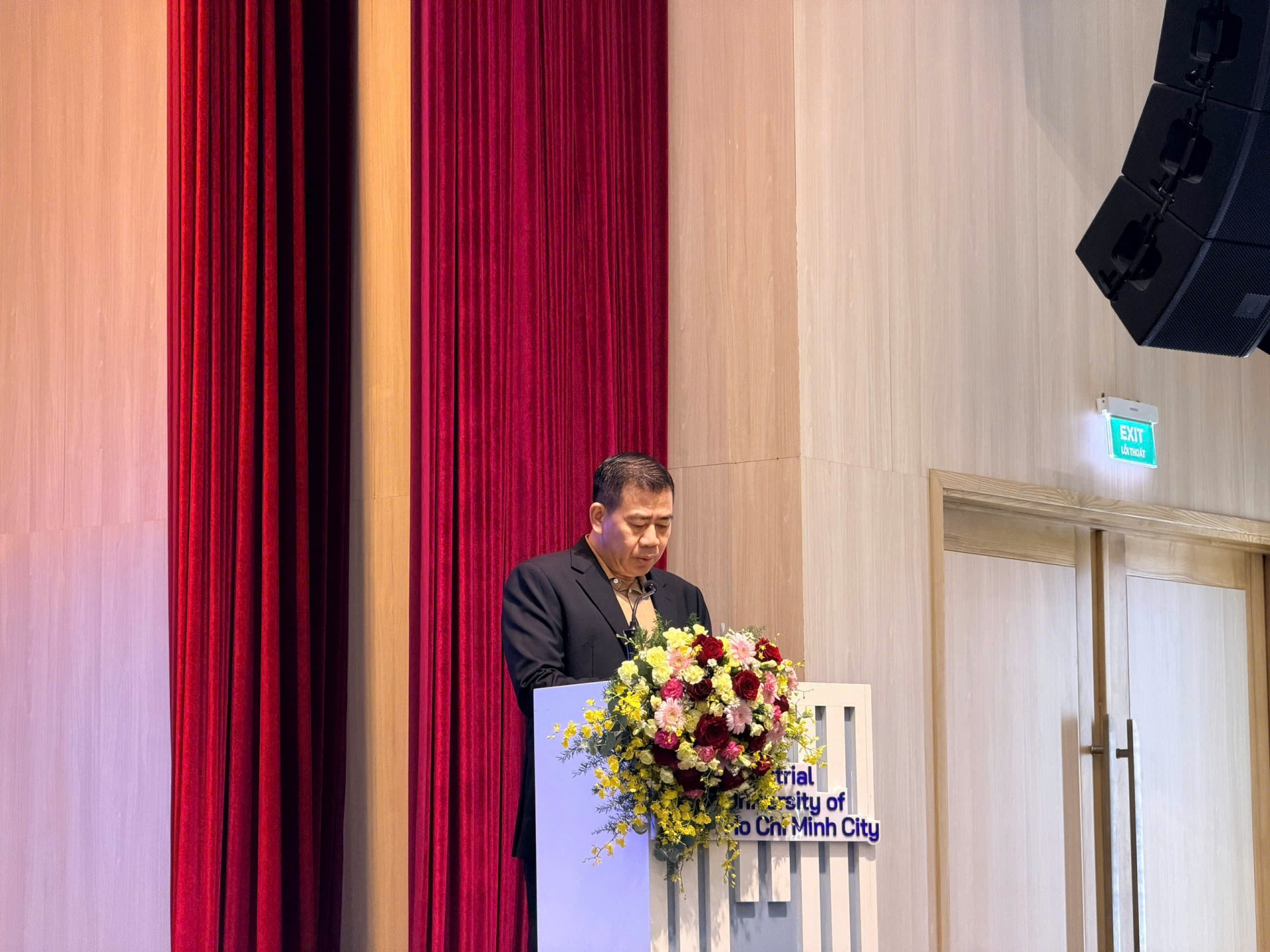 |
| Assoc. Prof. Phan Hong Hai, rector of Ho Chi Minh City University of Industry |
Assoc. Prof. Phan Hong Hai, rector of Ho Chi Minh City University of Industry, said the programme serves as a platform to connect academia with industry in shaping people for the digital era.
“In the context of fintech, blockchain, and AI reshaping the labour market, higher education must shift towards competency-based training aligned with real-world demands,” he said. “We are accelerating the integration of technology into curricula and strengthening industry partnerships to prepare students to master technology and create value in the digital economy.”
According to Nguyen Vinh Tuyen, deputy CEO of Nam A Bank and head of the Digital Finance Committee under the Vietnam Digital Communications Association, fintech is becoming a key driver of transformation, enabling banks to move from traditional operating models to more open and flexible platforms. Technologies such as e-verification, open APIs, AI, and blockchain are enhancing financial services by making them faster, more personalised, and more transparent.
“This trend allows banks to expand their ecosystems through partnerships with technology firms, while improving data analytics, risk management, and trust in the digital financial environment,” Tuyen said.
 |
| A panel discussion on opportunities and workforce requirements in the digital finance era |
Khuat Bich Thuy, legal and licensing director for Vietnam at Tether, highlighted that USDT is increasingly serving as a core liquidity infrastructure in the digital asset market. In the fourth quarter of 2025, more than 96 per cent of spot trading transactions used USDT as the base asset, contributing to improved market efficiency, narrower spreads, and faster price discovery on a global scale.
She also emphasised the growing role of stablecoins in areas such as tourism payments via crypto-enabled cards, cross-border transactions, and e-commerce in emerging markets.
“To capitalise on these opportunities, Vietnam needs to develop a workforce that meets international standards, particularly in cybersecurity, compliance, and risk management,” she said.
Data from CoinMarketCap and JPMorgan shows that the global digital asset market stood at approximately $2.54 trillion as of March, and could expand to $10 trillion by 2030.
In Vietnam, the number of digital asset holders has surpassed 17 million, according to Triple-A, placing the country among the world’s leading markets in terms of adoption.
“This trend is intensifying the need to build a workforce capable of operating and managing risks in an increasingly complex digital financial ecosystem,” said Hai of the Ho Chi Minh City University of Industry.