 |
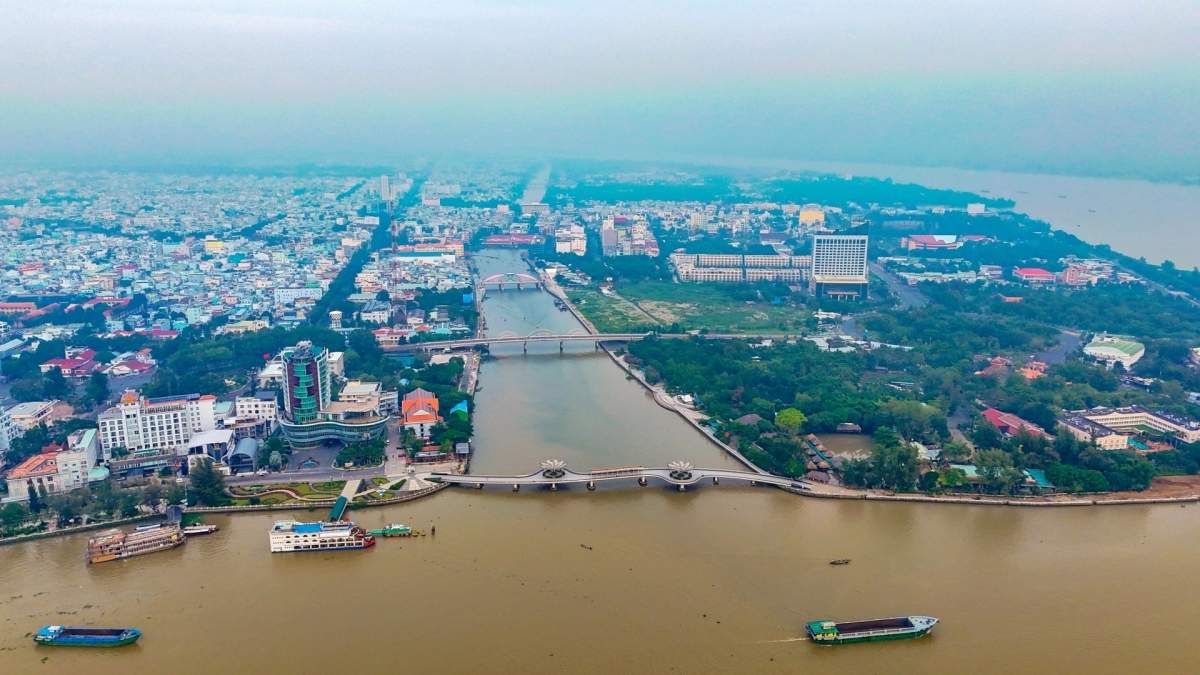
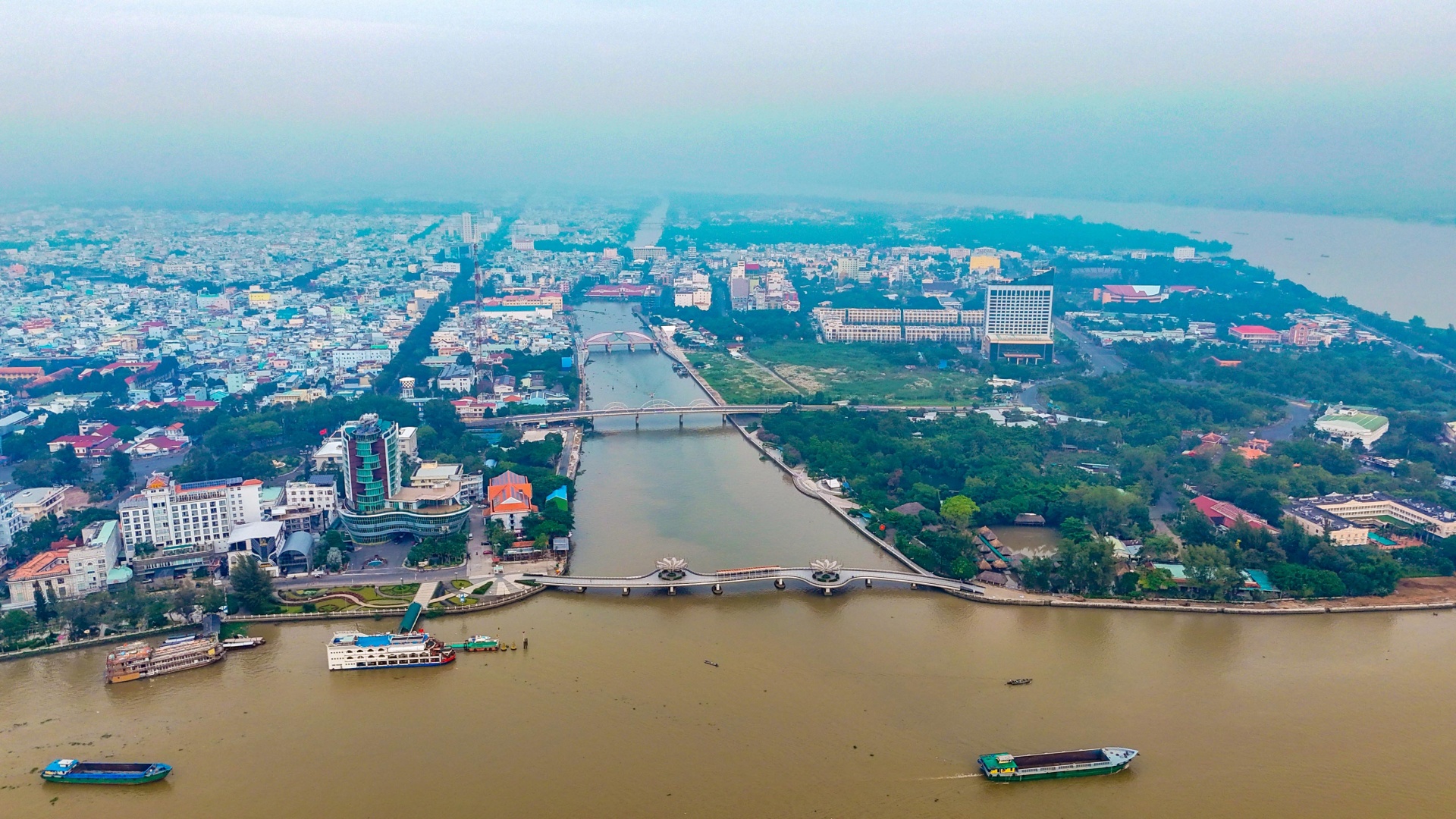
The new Can Tho City, established on July 1 following the merger of Can Tho, Soc Trang, and Hau Giang provinces, covers more than 6,360 km² and is home to over 3.2 million people across 103 commune-level units. With ample development space, abundant resources, and modern infrastructure, the city is positioned to become a regional growth pole and a key economic driver.
Can Tho boasts a comprehensive logistics ecosystem with vertical and horizontal highways connecting quickly with Ho Chi Minh City, the Eastern region, and the entire Mekong Delta. It also has convenient access to seaports, inland waterway ports, and international airports. A slew of key transport infrastructure ventures and seaports in the pipeline will encourage regional connectivity and development.
In recent years, the city’s development has achieved positive results. The city is reshaping its growth model, so its economic structure is shifting in the right direction – towards trade and services, industry, and construction – while gradually reducing reliance on agriculture, forestry, and fisheries.
Industrial production is on its upward trend, with processing industry playing a key role and accounting for a significant proportion of total industrial output. Meanwhile, trade and services are on the positive momentum, meeting evolving consumer demand. Modern, flexible, and diversified commercial activities now serve as a major driver of the city’s regional GDP.
Planning work ensures connectivity and consistency, creating new development space. The city issues and deploys a list of construction and urban planning projects, enabling relevant agencies to review, establish, adjust, and approve planning in accordance with regulations. The efforts aim to unlock the potential of each locality. Proposals are also made to encourage the development of energy clusters, concentrated IT zones, innovation hubs, and marine economic clusters.
Despite the global economic volatility in 2025, Can Tho maintains its growth trajectory and achieves encouraging results thanks to the unity and efforts of the political system and the business community. The city’s economy remains stable, with notable improvements across trade, services, industry, construction, and agriculture.
Since the start of the year, the industrial production index is estimated to have grown 10 per cent on-year. Export turnover and foreign-currency revenue reached $5.03 billion, up 10.6 per cent from a year ago. Import turnover stood at $1.19 billion, an increase of 10.2 per cent on-year.
Total retail sales of goods and service revenue climbed 16.5 per cent on-year to over VND322 trillion (approximately $12.2 billion). Tourist arrivals to the city hit close to 10.6 million, up 20 per cent on-year. About 4.7 million visitors stayed in local accommodation, reaching 96 per cent of the annual plan and up 27 per cent on-year.
With its significant potential, Can Tho has attracted many large-scale ventures in industrial-park infrastructure, trade, services, and energy. Phase 1 of the Vinh Thanh Industrial Park (Vietnam-Singapore Industrial Park Can Tho) covers just under 294 hectares with a total investment of $160 million.
Vietnam-Singapore Industrial Park (VSIP) Can Tho envisions a green industrial park with modern infrastructure and smart operations towards sustainable economic development. With its technical infrastructure taking shape, the venture has attracted a number of tenants.
Leaw Wee Ming, general director of VSIP Can Tho JSC, said, “Can Tho is selected for our 13th VSIP in Vietnam due to its strategic location at the heart of the Mekong Delta. Leveraging expanding expressways, river ports, and international airports, Can Tho is emerging as a logistics and supply-chain hub, linking the Mekong Delta with local and global markets.”
“The city boasts a strong economic potential as well as an abundant and young workforce. With over 3.2 million residents after the merger and 37 universities and colleges, Can Tho stands as the region’s leading education hub, supplying skilled labour for emerging industries,” Ming added.
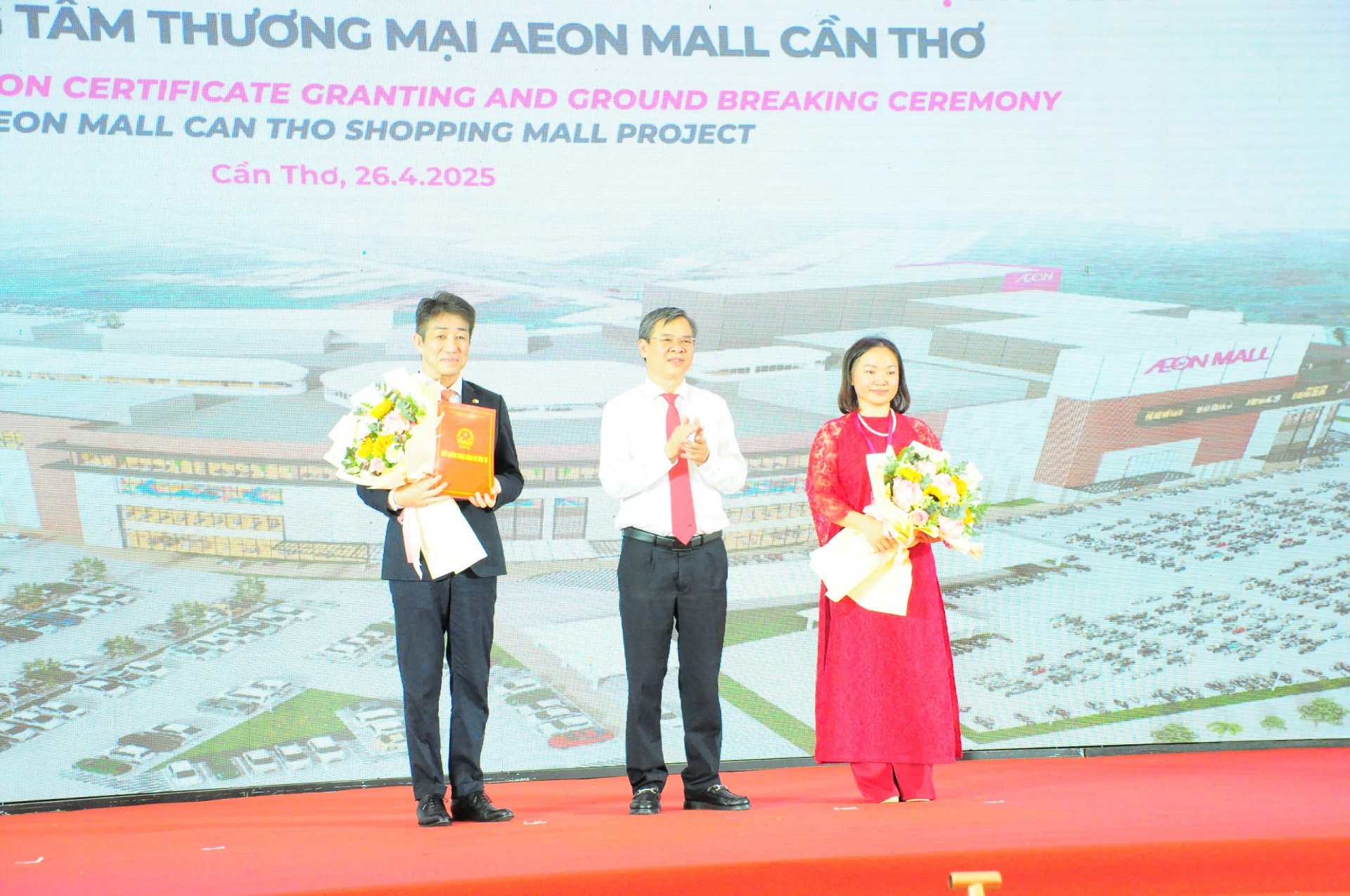
In the trade and service field, AEON Mall Can Tho broke ground in the locality last April, with an investment of VND5.4 trillion (almost $205 million). In the first phase, the project comprises a shopping mall with a floor area of 113,921 square metres, which is slated for completion within 36 months of licensing. The second phase will feature a second shopping mall and parking with a floor area of 81,152 sq.m. Once completed, Aeon Mall Can Tho will be the largest shopping mall in the Mekong Delta.
 |
In the energy sector, Petrovietnam, in collaboration with Can Tho city, kicked off construction of the O Mon IV Thermal Power Plant at the O Mon Power Centre in August. As a key component of the Block B–O Mon Gas-to-Power value chain, the plant uses combined-cycle technology with gas turbines, having a designed capacity of about 1,155 MW and an annual electricity output of around seven billion kWh.
Upon completion in 2028, the $1.3 billion plant is expected to deliver clean and efficient power to the Mekong Delta while boosting regional socioeconomic growth.
Numerous major corporations have explored investment opportunities in the city. Vingroup is proposing the Mekong Urban Tourism Resort in Chau Thanh, Dong Phuoc, Phu Huu, and Thanh Hoa communes with an area of over 2,945 ha. Central Retail Vietnam Group and Espace Business Hue JSC are surveying investment in shopping malls and supermarkets in the city.
According to Vuong Thanh Nam, deputy director of Can Tho Department of Finance, “In 2025, the city saw 4,600 newly registered enterprises with total registered capital of over VND26.8 trillion (over $1 billion), up almost 33 per cent. As of present, the city is home to 26,000 businesses in operation.”
Since early 2025, the city has wooed 22 new projects, including one foreign-backed initiative worth $100 million and 21 domestic ventures totalling VND20.2 trillion ($767 million). Currently, Can Tho hosts 124 foreign-invested projects with total registered capital of about $7.45 billion and 1,031 domestic projects with a total registered capital of more than VND451.5 trillion (more than $17.1 million). The figures reflect the city’s increasingly attractive investment climate for both local and foreign investors.
The city’s leaders give a top priority to improving the business and investment environment, making it more transparent, open, efficient, safe, and investor-friendly. As a result, its Provincial Competitiveness Index (PCI) ranks in the fairly high group.
City leaders also maintain regular meetings and dialogues with businesses to address challenges and support investors during project implementation and daily operations.
On December 3, Can Tho People’s Committee held the “2025 Dialogue Between Authorities and Businesses” to identify issues in production and operations, resolve obstacles, and support a more business-friendly climate.
Vuong Quoc Nam, Vice Chairman of Can Tho People’s Committee, said, “We acknowledge these concerns and affirm that the city will work to remove delays and create a favourable environment for investors. Can Tho committed to the ongoing administrative reforms, especially in land, investment, construction, and business registration.”
 |
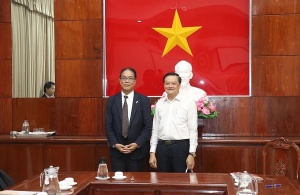
Korean Energy Agency seeks investment opportunities in Can Tho
Ha Vu Son, Director of the Department of Industry and Trade of the Mekong Delta city of Can Tho, on July 18 received a delegation of the Korean Energy Agency (KEA) led by its President Lee Sang-hoon who came to seek investment opportunities in the city. |
 |
Japan to sponsor over 28 million USD for Can Tho city’s smart city project
The People’s Committee of Mekong Delta city of Can Tho on July 24 held a working session with Fujitsu Limited of Japan on a project on providing technical support for the locality, aiming to build a smart city model through digital transformation in land management. |
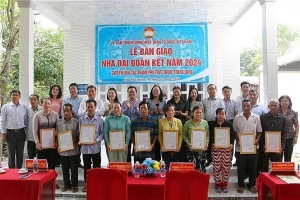 |
Ten needy households in Can Tho receive housing support
The Vietnam Fatherland Front (VFF) Committees of five centrally-run cities on December 10 presented 10 great solidarity houses to needy households in Co Do district in the Mekong Delta city of Can Tho. |