 |
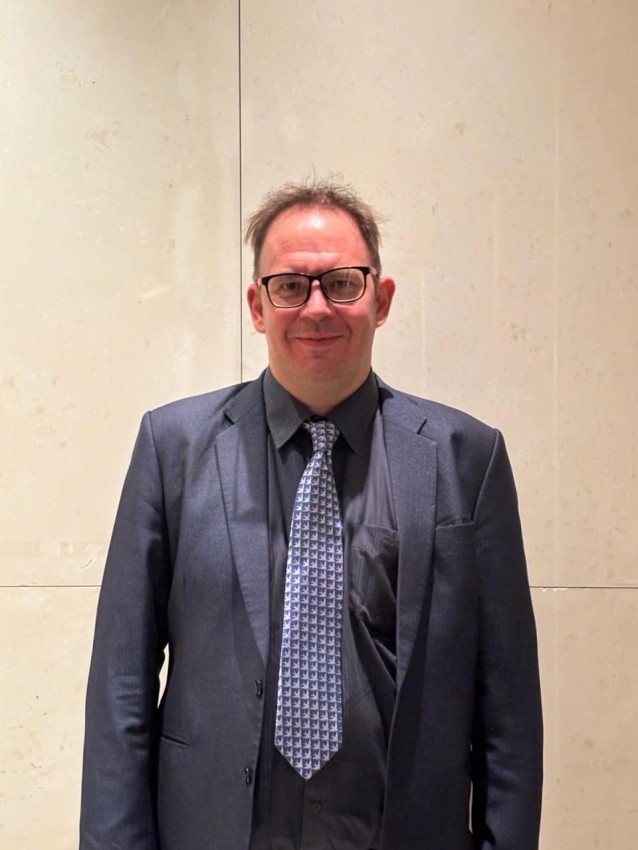
| John Robert Cotton, deputy director of the Southeast Asia Energy Transition Partnership |
Vietnam has just developed its first national sustainable cooling plan (NSCP), integrating both active and passive cooling measures. What do you see as the most significant achievements of this plan?
As international partners, we see the plan as a landmark achievement. It is the first national roadmap that comprehensively tackles one of the fastest-growing drivers of emissions and energy demand.
The numbers are impressive: by 2050, the plan could deliver more than 800 terawatt-hours of electricity savings, easing pressure on the grid and avoiding costly new capacity. Without the plan, cooling emissions were projected to peak at 116 million tonnes CO2e in 2045, nearly 10 per cent of the country’s total. With implementation, these emissions are expected to fall by 97 per cent compared with business-as-usual.
The plan also commits to phasing out hydrochlorofluorocarbons (HCFCs) by 2040 and cutting hydrofluorocarbon (HFC) consumption by 80 per cent by 2045, in line with the Kigali Amendment. For buildings, it requires that half of all new construction meet green or energy-efficient standards by 2039, and all by 2044.
The plan combines appliance efficiency, refrigerant transition, passive building design, and cold chain development. How well do you think these components have been integrated, and where do you see the greatest potential impact?
The NSCP is distinctive because it integrates across institutions, policies, and financing, making cooling not just a technical fix but a coordinated national strategy.
Implementation is overseen by an inter-ministerial framework, which avoids duplication and ensures that efficiency, refrigerant transition, and passive design are advanced in parallel.
The plan groups action into four strands – appliance efficiency, refrigerant lifecycle management, passive and urban cooling, and cold chain development – each phased from 2024 to 2045.
The NSCP also builds finance into delivery. For example, cooling-as-a-service removes upfront costs, trade-in schemes with producer levies accelerate stock replacement and safe refrigerant recovery, and Article 6 ITMO pilots create new revenue streams from verified reductions.
In terms of impact, the largest near-term wedge comes from air conditioners. A 50 per cent efficiency gain by 2030 yields 9.9 TWh of savings in 2030 and nearly 70 TWh by 2050.
Passive design closes today’s gap – 98 per cent of new buildings lack insulation, and 75 per cent use single glazing – putting the sector on track for half of new construction to be green-certified by 2039 and all by 2044.
Cold chain improvements address annual food losses of 8.8 million tonnes, worth $3.9 billion, while shifting away from high-global warming potential (GWP) refrigerants. Finally, after 2040, refrigerant leakage becomes the main challenge, making the plan’s lifecycle management roadmap decisive.
The NSCP sets ambitious targets, such as halving cooling energy intensity by 2050 and cutting HFC consumption by 80 per cent by 2045. What are the main challenges for Vietnam in turning these targets into enforceable policies and practical actions?
Delivering these requires overcoming five core challenges, and the first is building compliance. Although energy efficiency building codes exist, 41 per cent of new buildings exceed window-to-wall ratio limits, and nearly all are constructed without insulation. The NSCP provides a pathway by linking energy efficiency benchmarks and green building certification to construction permits.
The second aspect is outdated standards. Current minimum energy performance standards (MEPS) are below market reality. The NSCP updates them by tying product controls to refrigerant schedules – progressively banning high-GWP HFC products from 2029 onwards, and aligning MEPS with a 50 per cent efficiency improvement in new air-conditioning systems by 2030.
The third factor is refrigerant lifecycle management. Direct emissions will dominate after 2040, so the plan mandates a national refrigerant registry, technician certification, and monitoring, reporting, and verification (MRV) system.
Next up is financing transition costs. High-efficiency equipment and low-GWP refrigerants often cost more upfront. To close this gap, the NSCP embeds financing tools, which combine cooling-as-a-service, trade-in schemes with producer levies, and ITMO pilots, to lower costs and attract international capital.
The final aspect is policy and legal alignment. The amended Law on Economical and Efficient Use of Energy is a turning point, explicitly recognising insulating materials as energy-saving products.
Other countries in Southeast Asia are developing similar plans. In what ways can Vietnam’s experience with the NSCP inform or inspire sustainable cooling strategies across the region?
Vietnam’s NSCP arrives at a time when cooling demand is exploding across Southeast Asia. Vietnam’s contribution to this regional landscape is its emphasis on institutional integration and financing solutions.
Institutionally, the NSCP implementation will be coordinated through an inter-ministerial structure with the management of the Ministry of Agriculture and Environment over refrigerant management and the cold chain, the Ministry of Industry and Trade over appliance efficiency and standards, and the Ministry of Construction over urban planning and building codes.
This clear division of responsibilities prevents overlap and ensures that policies on efficiency, refrigerants, and passive cooling are advanced in a complementary and coordinated manner.
On financing, the NSCP sets clear timelines for appliance efficiency, refrigerant transition, and building standards, and it links them with financing tools like trade-in schemes, cooling-as-a-service, and Article 6 carbon markets. This provides a replicable model for other countries.
The NSCP highlights innovative financing models. Which of these do you think holds the most promise for mobilising investment and accelerating adoption in Vietnam?
The NSCP is forward-looking because it does not rely only on regulation – it also proposes financing models that can scale adoption.
Cooling-as-a-service allows energy service companies to finance efficient equipment and recover costs through savings, removing the upfront barrier for users. Trade-in and recycling schemes, backed by producer levies, can accelerate the removal of inefficient appliances while ensuring refrigerants are safely recovered.
Most importantly, Vietnam plans to pilot Article 6 transactions, generating ITMOs from projects such as efficient AC roll-outs and refrigerant recovery.
These credits create new revenue streams and can channel international climate finance into domestic programmes. Given that the net-zero scenario foresees nearly 100 MtCO2e of avoided cooling emissions by 2050 compared to business-as-usual, the financing opportunity is substantial.
For investors, these mechanisms provide credible pathways to mobilise capital; for Vietnam, they ensure the NSCP is not only technically sound but financially viable.
How can international organisations support the implementation of the NSCP, particularly on energy efficiency, emissions reduction, and financing?
International partners have a central role in supporting Vietnam to translate the NSCP into action.
Firstly, on the technical side, partners can assist with updating appliance standards, strengthening building codes, and establishing lifecycle management systems for refrigerants.
In finance, partners can help design blended finance vehicles that de-risk investments in efficient equipment, cold chain logistics, and passive building retrofits, and they can facilitate Article 6 transactions to bring new international capital.
Regarding capacity building, partners can support training programmes for technicians, builders, and policymakers to adopt best practices and safely handle low-GWP refrigerants.
Last but not least, in monitoring, partners can help build robust MRV systems to track milestones like the 50 per cent efficiency improvement in air conditioners by 2030, the 80 per cent HFC cut by 2045, and universal green certification for new construction by 2044.
By working in these areas, international organisations can help ensure that the NSCP delivers its intended contribution to Vietnam’s NDC and the net-zero target, while also generating lessons for the wider region.
 |
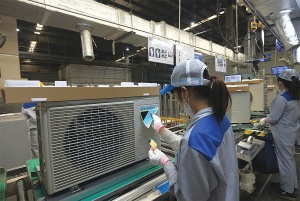
Green cooling solutions are an urgent national requirement
Climate change is evolving in complex ways, with unprecedented extreme weather events occurring in some regions. According to a January report by the World Meteorological Organization, 2024 was the hottest year on record, with abnormal temperatures on land and ocean surfaces, record-high ocean temperatures, and extreme weather events affecting many countries worldwide. |
 |
Cooperation on hand for cooling plan
Despite being backed by international support, implementation of a cooling action plan will require more support from banks and businesses, especially in the technical and appraisal realm. |
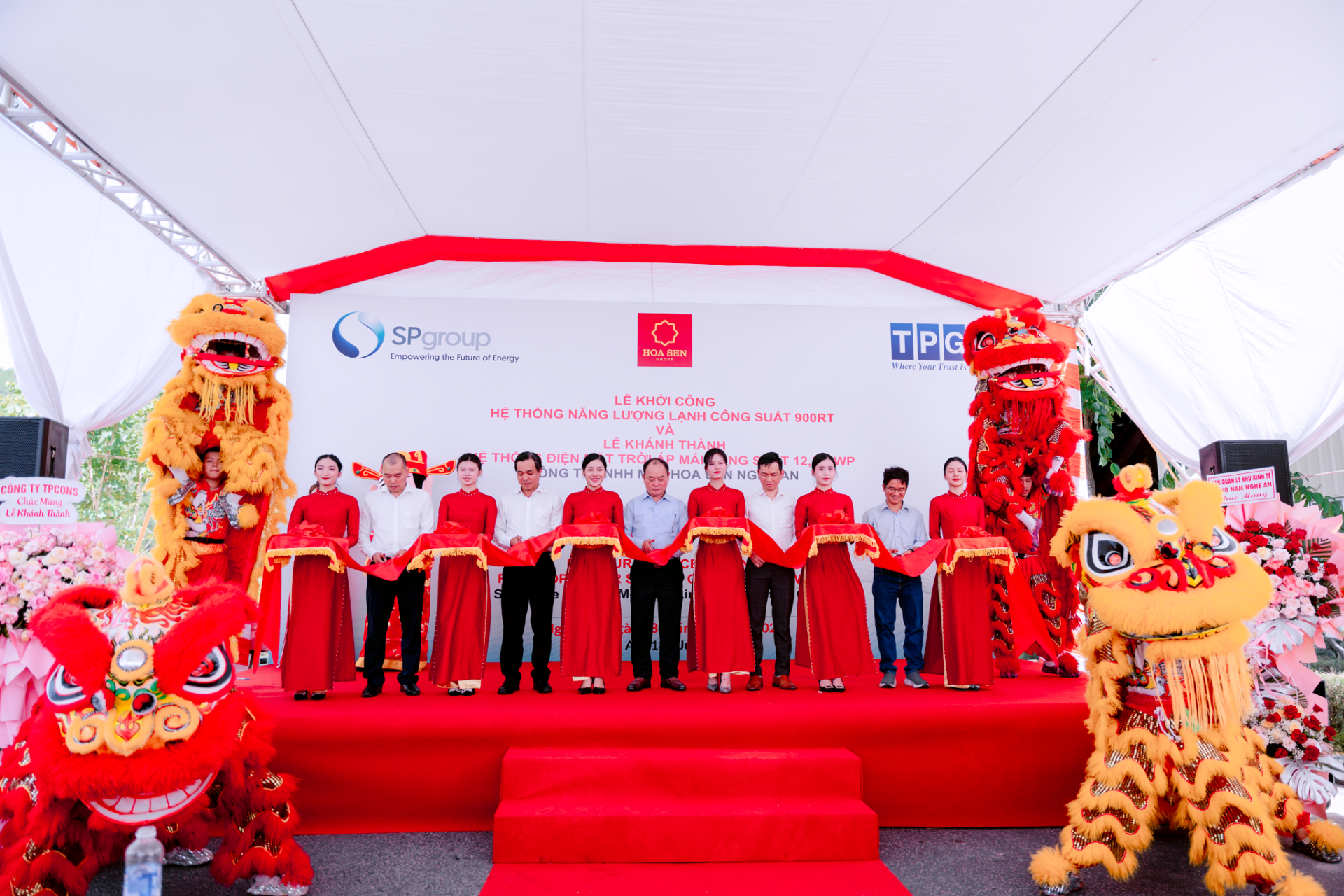 |
SP and Hoa Sen launch Vietnam’s first Cooling-as-a-Service venture
SP Group is teaming up with Hoa Sen to launch Vietnam’s first industrial Cooling-as-a-Service, delivering energy-efficient cooling and solar power to two major steel plants in Phu My and Nghe An. |
 |
UNEP backs Vietnam’s push for sustainable cooling
The UN Environment Programme (UNEP) has expressed readiness to help Vietnam adopt sustainable cooling solutions and strengthen regional cooperation to scale them up. |
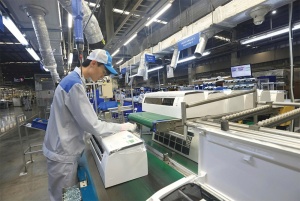 |
Gains to be generated from cooling models
Putting sustainable cooling into practice will not only create billion-dollar economic opportunities for businesses but also help to mobilise green finance funds to develop green urban areas. |
 |
Vietnam’s ozone protection drive delivers major climate gains
Vietnam’s efforts to phase out harmful industrial compounds have delivered major climate gains, cutting emissions equal to hundreds of millions of tonnes of CO₂ over the past three decades. |