Zayu the Jaguar Mascot, representing Mexico, and Maple the Moose, representing Canada, are marked as “sold out” on Jazwares’ online shop. The products are priced at US$12.99 each.
The Bald Eagle Masco, representing the U.S., remains available with a 30% discount at $9.10.
Several other World Cup plush toys made by the company are also sold out, including the plush trophy ($9.99) and the BumzBumz fan finger ($8.99).
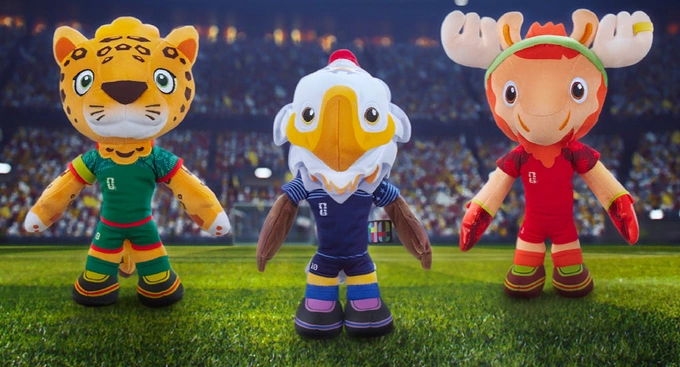 |
FIFA World Cup 2026 plush mascots made by Jazwares. Photo courtesy of Jazwares |
Jazwares was founded in 1997 in Sunrise, Florida. In 2022, Berkshire Hathaway acquired the toy maker through its subsidiary Alleghany Corporation, providing Jazwares with additional resources to expand its global operations.
Under its agreement with FIFA, Jazwares develops and manufactures several officially licensed World Cup products, including the tournament’s plush mascots. Neither Jazwares nor FIFA has disclosed sales figures for the merchandise.
Internationally, the Berkshire Hathaway-owned company is also well known for owning and holding distribution licenses for toy brands and franchises including Squishmallows, Pokemon, Hello Kitty, Star Wars, and Disney.
The 2026 FIFA World Cup is also being billed as the largest tournament merchandise retail program in the competition’s history. In addition to Jazwares, FIFA has licensed more than 100 other partners to manufacture and distribute official products.
FIFA said its retail program has significantly exceeded its original expectations and forecasts. Official 2026 FIFA World Cup merchandise is now available not only through FIFA’s official stores but also at thousands of pharmacies, convenience stores, supermarkets, airports, and transportation hubs across the United States.
Through a partnership with Prepango, the merchandise is also being sold through vending machines located in high-traffic areas.
Stu Crystal, a veteran licensing executive who previously led consumer products for MLS, said FIFA’s retail campaign is larger in scale than those of most previous World Cups, as reported by Sports Business Journal.
“It’s the confluence of the biggest event in the world and a country that looks like this is going to be the tipping point for the sport.”
FIFA’s approach to retailing merchandise during the 2026 World Cup could also provide a new commercial model for U.S. sports leagues.
Rachel Hoagland, MLS vice president of consumer products, said previous tournaments relied on limited retail channels because of constrained shelf space and the short lead time for events such as the MLS Cup Final.
By expanding tournament merchandise into convenience stores, supermarkets, and pharmacies, as FIFA has done, Hoagland believes the strategy could help MLS and its clubs engage with fans more frequently as part of their everyday lives.
“We have the opportunity post-World Cup, with all the attention on the sport, to be more thoughtful in how we are driving discovery for MLS.”
Sourcee.vnexpress.net