 |
|
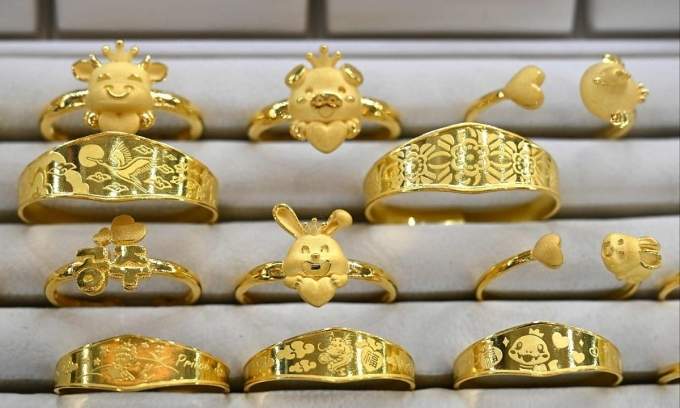
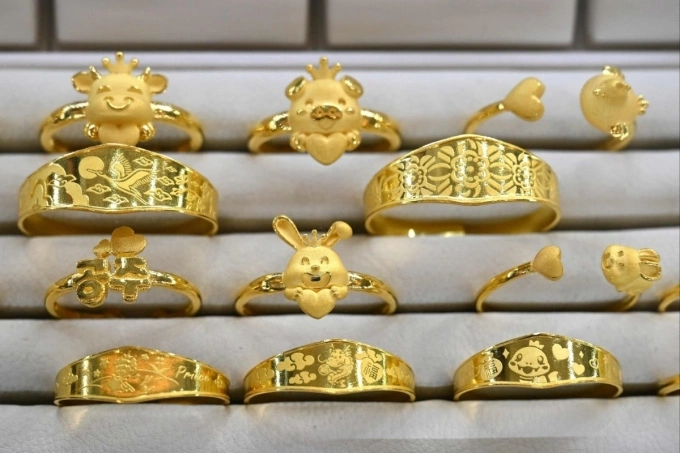
Gold jewellery on display at a store in Seoul, South Korea. Photo by AFP |
The spot price of gold in South Korea hovered at around 245,000 won ($168) per gram as of Thursday, representing a roughly 80 percent increase from 138,000 won a year earlier, according to the Korea Exchange. Before a sharp sell-off earlier this week, the price of gold had peaked at 269,810 won. Prices have climbed more than three times over the past five years and are now over five times higher than levels seen a decade ago.
Consequently, the cost of a dolbanji, a gold ring traditionally gifted on a baby’s first birthday, has become way too expensive. Each ring typically contains 3.75 grams of 24-karat gold, a standard that now costs roughly 1 million won in late January 2026, according to Chosun Daily.
“Ten years ago, the ring cost roughly 200,000 won, a relatively manageable amount for close family and friends to give to babies. Now it costs more than 1 million won, which makes it overwhelming for both givers and recipients,” a gold vendor at Jong-no, a central Seoul district known for its jewelry shops, told The Korea Herald.
She noted that customers are shifting toward 1.875-gram alternatives or even 1-gram rings to maintain the symbolism without spending a hefty sum.
“When I bought a ring for my nephew last year, I was surprised by how expensive it was. But now, with my friend’s son’s birthday coming up, the price has doubled. I will just gift cash instead,” said Kim Dong-hyun, an office worker in his 30s.
The drastic climb of gold prices has also created a dilemma for parents who previously received rings and now feel pressure to reciprocate.
“When I received a gold ring for my son’s birthday, it was a gift worth around 500,000 won,” said a mother who celebrated her son’s first birthday last year. “To buy the same ring now, I would need to spend more than 1 million won. Now that I think about it, I wish I had not received the rings in the first place.”
 |
|
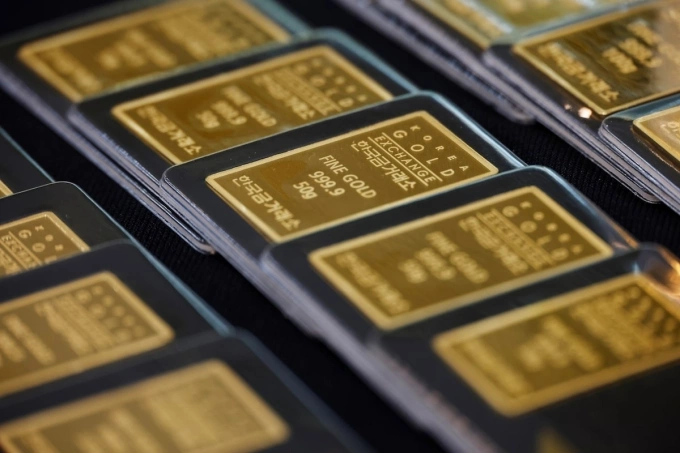
Gold bars are pictured on display at Korea Gold Exchange in Seoul, South Korea, Aug. 6, 2020. Photo by Reuters |
The impact extends to weddings, where the yemul tradition, exchanging gifts like gold bracelets, bullion, or golden turtles, is fading.
“The practice was already fading with changes in marriage culture, but with gold prices this high, we are planning to replace it with cash,” said Kim Eun-jeong, an office worker in her 30s set to marry in May.
She added that even the cost of silver has skyrocketed, complicating her decision to prepare the traditional “three yedan musketeers” gift set of bedding, tableware, and silver cutlery.
“Some of my friends who married before me skipped yemul but still prepared the trio. But even silver prices have skyrocketed, and I am torn over whether to prepare the set or not,” she said.
Luxury wedding bands from high-end brands like Cartier, Bvlgari and Tiffany have also seen price hikes, prompting some couples to opt for simpler, unbranded gold rings that serve as both a symbol of marriage and a financial asset. Rings made of purer gold often sell for more than those branded ones.
“Of course, we are not buying the rings with the intention of selling them,” one bride-to-be said. “But it still feels reassuring to own something that holds its value. After all, gold has always been the ultimate safe-haven asset.”
Corporate culture is also adapting, with companies like GC Pharma and Seegene reportedly discontinuing long-service gold gifts in favor of cash.
“Though not always tied to years of service, many companies occasionally express their gratitude to employees with gifts of gold,” a recently retired office worker told The Korea Herald. “Over my 30-year career, I personally received small gold items, such as business cards and pins. But that now seems to have become a fable of the past.”