The Malaysian ringgit has climbed 8.14% against the U.S. dollar as of Nov. 13, making it Asia’s best-performing currency so far this year. For Singaporeans heading north, that means about RM3.18 (US$0.77) for every Singapore dollar, down from nearly RM3.36 in April, though still far from the early 2024 rate of above 3.50, Bloomberg reported.
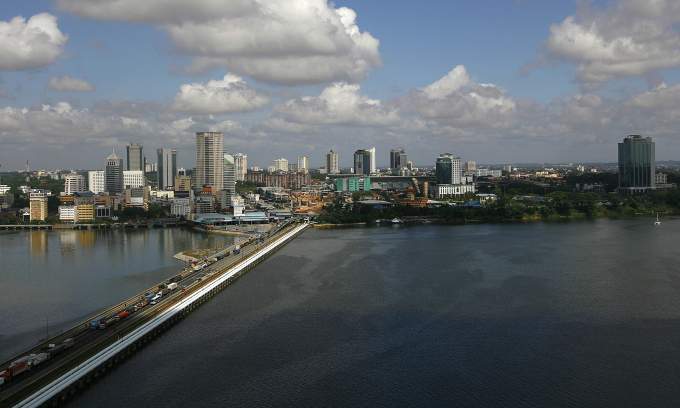
But the stronger ringgit has not stopped Singaporeans from going to Johor Bahru, which is linked to the city-state by the Singapore-Johor Causeway.
Edmund Lee, a Singaporean who works in finance, said he makes the trip roughly every three weeks to shop for groceries and eat out with friends in JB.
“For me, it doesn’t matter because I don’t spend much here,” he told The Straits Times. “Even if you (spend 500 or 1,000 ringgit), … (the) difference is about 20 ringgit or whatever.”
Singaporean Mohd Taufik Mustafa said he noticed only a “slight difference” after spending RM300-400 on groceries.
“It’s not like when the exchange rate was RM3.09, RM3.02, or RM2.80 (to S$1), then it would be more noticeable,” he told Channel News Asia.
Tang Guek Peng, a Malaysian administrative executive in Singapore, said she still takes her daughter across the border for twice-a-week ballet lessons, which come to RM210 per month, and weekly piano lessons that cost RM110 per month.
Having moved to the city-state over two decades ago, when the ringgit was at RM1.46 against the Singapore dollar, she said each of those lessons would cost S$300-600 (US$231-463) per month in the city-state and that Malaysia remains relatively cheaper.
 |
|
A general view of the Causeway linking Johor Bahru (top) to Singapore, Jan. 17, 2007. Photo by Reuters |
Ivan Teo, chairman of the Malaysia Association of Hotels Johor Chapter, also said the number of visitors from Singapore has stayed steady, likely because they have higher purchasing power and are less sensitive to the ringgit’s rise.
“Demand from Singapore continues to be strong and we don’t expect it to change ahead of the school holiday season (Nov. 22 to Dec. 31),” he noted.
Concurring, Jimmy Leong, chairman of the Johor Tourist Guides Association, added that demand from visitors from Indonesia and Thailand, meanwhile, has “dipped slightly.”
The Johor day trip
The Causeway is one of the busiest land crossings in the world, with an average of more than 350,000 daily travelers ranging from Malaysians commuting to work to Singaporeans heading across the border for cheaper shopping. On holidays, the number can spike above 500,000.
Last year, Singaporeans accounted for 17.5 million of Johor’s 22.07 million foreign visitors. They made up over 78% of the total, or 11.27 million out of 14.4 million, in the first seven months of this year, as reported by The Star.
And even more visitors are expected with the upcoming Johor Bahru-Singapore Rapid Transit System. Slated to start service by late 2026, it is expected carry up to 10,000 passengers per hour in both directions, cutting travel time between the two cities to under 10 minutes.
Beyond food and groceries, Johor’s draws also include healthcare and entertainment.
53-year-old Rachel Tan, for example, hops on a bus across the Causeway every month to stock up on groceries, enjoy lunch and catch a film. The entire outing usually costs the Singapore tutor around RM300, a fraction of what a similar day would set her back in the city-state.
“Since I need to go somewhere to relax on my day off, why not go somewhere where it is more affordable?” she told the South China Morning Post. She pointed out that an RM10 movie ticket there would cost five times more back home.
For Wan Hoe Yin, whose company allocates S$500 every two years for health check-ups, spending the fund in Johor makes financial sense.
“With the same amount of money, it covers two X-rays, two ultrasounds, one CT (computed tomography) scan of the heart as well as tumor markers and all the other standard tests,” he said to The Business Times.
Looking forward, the ringgit is forecast to continue rising next year, making shopping trips to Johor even more expensive.
Arifz Rudyman, a sales manager, said he might think twice about his JB trips if the ringgit were to climb to RM2 per Singapore dollar.
But “the savings are still there as long as it is hovering around RM3 against the Singdollar,” he said.
For the time being though, Johor Tourist Guides Association’s Leong said: “For Singaporeans, it’s still value for money to shop, engage in gastronomy tourism, medical tourism and other sectors (in Malaysia).”