 |
| Khushboo Goyal |
Across Vietnam’s real estate and construction markets, prices are expected to stabilise, with modest 5–8 per cent increases for well‑located residential projects in Hanoi and Ho Chi Minh City, especially around metro lines, ring roads, and upgraded urban infrastructure.
Demand is clearly shifting towards real end‑users who prioritise legal transparency and reputable developers. While 2026 is unlikely to replicate the rapid expansion of earlier cycles, quality, well‑planned projects are expected to outperform and lay the groundwork for a more resilient upswing beyond 2026. For investors, this marks a shift: long‑term value takes priority over short‑term speculation.
Vietnam is entering one of its most active infrastructure investment periods. Public investment disbursement is projected to rise 8 per cent in 2026, reaching record levels. Major projects – including the North–South Expressway, Long Thanh International Airport, Gia Binh Airport, and new metro lines – will directly boost construction output, expected to grow by around 10 per cent.
Improved highways and transit networks are already opening new development corridors, attracting both suburban projects and logistics hubs. As public-private partnership regulations become clearer and more investor‑friendly, co‑financed infrastructure is emerging as a sizeable opportunity. Overall, this infrastructure wave acts as a catalyst for long‑term real estate and regional development.
A series of legal reforms effective between late 2023 and early 2026 is reshaping the regulatory environment. Updates to laws for land, housing, real estate, and construction are addressing longstanding challenges in land administration and project approvals. Key improvements include annual market‑based land pricing, expanded eligibility for land‑use‑rights certificates, clearer rules for apartment ownership, stricter governance of off‑plan sales, and digitised permitting processes under the new Construction Law.
Developers are already reporting smoother interactions with authorities and faster project progression. These reforms signal that Vietnam is open for business, strengthening predictability and transparency. Real estate was Vietnam’s second‑largest foreign direct investment sector in 2025, and the improved legal framework should spur even stronger investor interest in 2026.
Green goes mainstream
Green construction has moved from niche to norm. Vietnam now counts 780+ green-certified buildings, with 196 projects earning green labels in 2025 alone. This surge is driven by policies such as a 2024 circular which introduced mandatory green criteria for large new developments, and local initiatives such as Ho Chi Minh City’s fast-tracked permits and floor-area incentives for green buildings.
Developers are embracing sustainable architecture not only to meet regulatory requirements, but also to meet rising buyer and tenant expectations. Financing trends reinforce this shift: Vietnamese banks and corporates issued more than $1.5 billion in green bonds and sustainability‑linked loans by end‑2025, reducing capital costs for projects aligned to environmental, social, and governance principles. With national green building standards planned for 2026 by the Ministry of Construction, sustainability is becoming a clear competitive advantage.
Industrial real estate remains Vietnam’s most resilient and high‑performing segment. Occupancy rates exceed 90 per cent in key industrial provinces, while manufacturing accounts for more than 80 per cent of foreign investment disbursements, driven by the ongoing China+1 diversification.
New infrastructure – including expressways connecting ports and factories, deeper seaports, and improved power supply – is strengthening Vietnam’s position as a manufacturing and export hub. Industrial and logistics assets offer stable yields, long‑term tenants, and strong rental growth potential. Developers are expanding into emerging provinces to serve overflow demand from saturated core areas, ensuring continued momentum in 2026 and beyond.
Meanwhile, technology is reshaping every layer of Vietnam’s property market. The country is supporting a nationwide digital transformation effort, while the new National Land Information System has already cut land administration timelines from 45 days to 23 business days. The forthcoming digital permitting platform under the Construction Law will streamline approvals even further.
On the ground, developers and contractors are adopting BIM, drones, AI‑enabled scheduling, and site safety systems, improving efficiency and reducing risk. Proptech adoption has also surged: about 80 per cent of homebuyers now begin their search online, with digital brokerages rapidly gaining market share.
New digital asset classes, such as data centres, are emerging rapidly after regulators opened the door to 100 per cent foreign ownership. This is drawing major international players and adding depth to Vietnam’s real estate ecosystem.
Ho Chi Minh City’s plan to develop the Vietnam International Financial Center (VIFC) is becoming a powerful driver of high‑end real estate. The 900‑hectare development has nearly $10 billion in committed capital and aims to attract 50+ global financial institutions within three years. Founding members already include Nasdaq, major banks, and leading conglomerates.
Demand is rising for Grade A office towers, luxury hotels, fintech campuses, and premium residential units, transforming Ho Chi Minh City’s skyline and positioning Vietnam as a future regional financial hub. For developers and investors, VIFC‑linked projects present significant long‑term opportunities tied to international business growth and high‑skilled talent inflows.
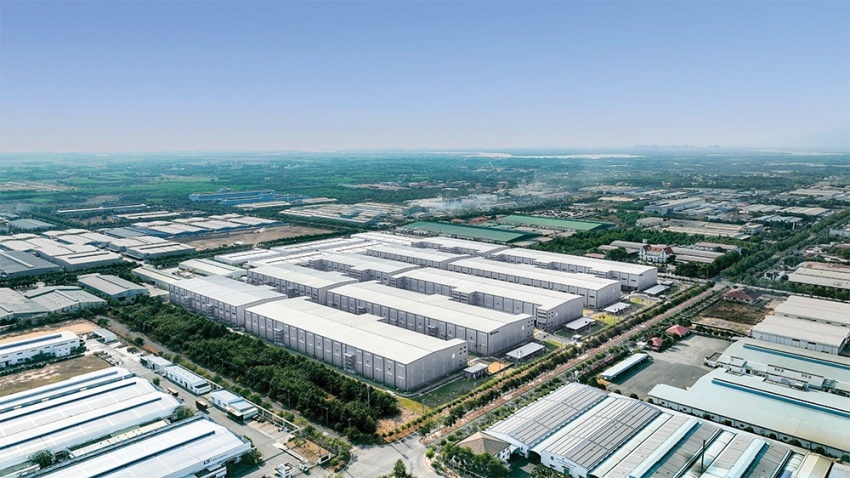 |
| Industrial real estate remains Vietnam’s most resilient and high‑performing segment Photo: Le Toan |
Key challenges and risks
Despite the positive outlook, several structural challenges and external risks could temper the pace or breadth of the sector’s growth.
Rapid price escalation – 20–30 per cent year‑on‑year in recent periods – has pushed average condo prices in major cities to VND100 million ($4,000) per sq.m, roughly equivalent to the annual income of many households, creating a housing affordability crisis in Vietnam’s major cities. This places homeownership out of reach for a large segment of the population.
Supply remains heavily skewed towards luxury products, with limited availability of mid‑range or affordable housing. The government has acknowledged this imbalance and aims to build 1 million affordable housing units by 2030 while also offering incentives to developers of social housing. Bridging the affordability gap remains one of the sector’s most pressing challenges in the near term.
Speculative buying and excessive leverage contributed to inflated land prices and “ghost projects” in the early 2020s. In response, new taxes effective in 2026 will penalise quick resales and multiple‑home ownership. The central bank has also capped real estate credit growth at around 15 per cent for 2026, down from around 20 per cent.
While these measures promote healthier market behaviour, they also risk tightening financing for legitimate projects – especially for developers still recovering from the 2023 liquidity crunch. Policymakers must balance stability with adequate capital flow, a challenge that will directly influence 2026 market sentiment.
Input costs for development remain high. Land acquisition is expensive, and prices for construction materials like steel and cement have stayed elevated, squeezing profit margins. These cost pressures, combined with past regulatory delays, have constrained new supply and pushed prices up.
Although recent legal reforms promise to shorten timelines and improve clarity, effective implementation will be the true test. Local authorities need to align regional plans with new infrastructure, standardise and expedite permitting steps, and ensure transparency at all levels of project approval. 2026 will be a key test of whether the new framework delivers on its promise or whether legacy issues persist. Should bureaucracy or inconsistent enforcement continue to hinder projects, the sector’s recovery could be slower and uneven across regions.
Global interest rate movements, currency fluctuations, and geopolitical tensions all influence Vietnam’s real estate outlook. Higher global interest rates may increase borrowing costs and curb foreign investor appetite. Meanwhile, although manufacturing rebounded in 2024–25, global demand remains uncertain.
Vietnam has maintained inflation at around 3–4 per cent and kept its currency relatively stable, which supports buyer confidence and project viability. Maintaining this stability amid global volatility will be essential.
Vietnam’s real estate and construction sectors enter 2026 with cautious optimism. Infrastructure momentum, end-user demand, and improved regulatory clarity support a healthier, more stable property market. Construction is positioned for high growth, while real estate increasingly favours genuine users over speculators.
Success in this new era will come from focusing on mid‑market housing, industrial/logistics assets, and digital innovation. Rather than chasing quick gains, 2026 is about recalibration, discipline and building durable value, setting solid foundations for Vietnam’s next growth chapter.