Cho Soo-chul, a Seoul tenant in his 40s, has spent years buying lottery tickets in the hope of winning enough money to purchase a home – a goal he says has become impossible without hitting the jackpot as housing prices soar.
 |
|
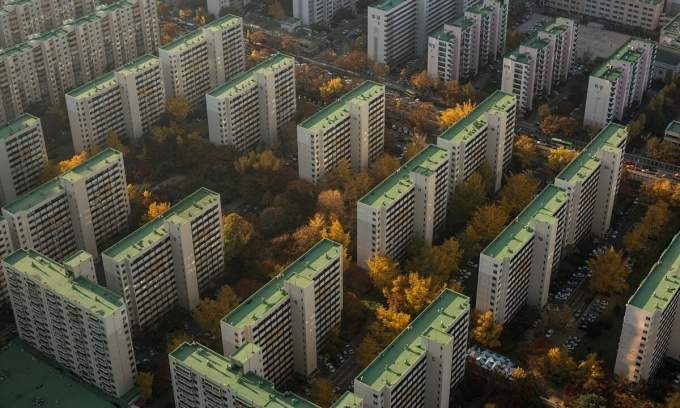
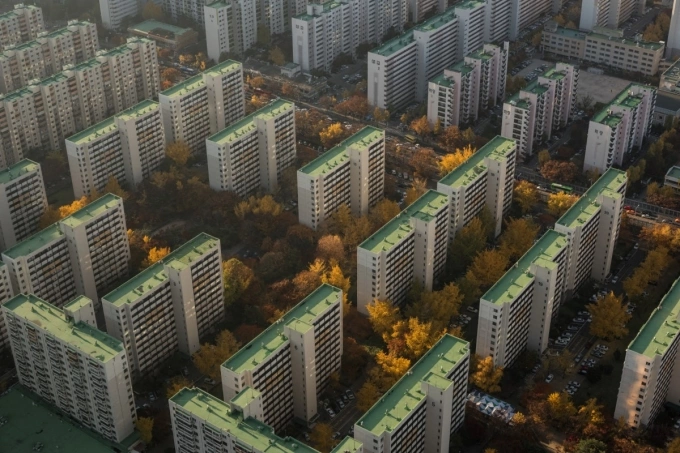
Apartment buildings of the Yeouido district of Seoul, as seen from the landmark 63 tower, November 15, 2016. Photo by AFP |
But that hope is fading, Cho said. “Lottery jackpots have dropped to a level that is not even enough to buy an average apartment in Seoul after paying taxes,” he told The Korea Times.
Cho’s frustration is reflected in data released Monday by Dong Hang Lottery, the government-contracted lottery operator.
The average jackpot in 2025 stood at KRW2.06 billion (US$1.41 million), falling to KRW1.4 billion after taxes.
That after-tax figure is below the average price of an apartment in Seoul, which reached KRW1.5 billion in December 2025, according to separate data compiled by KB Land, the property data platform of KB Kookmin Bank.
Last year’s largest jackpot was KRW2.06 billion – the lowest on record except for Lotto’s first year in 2002.
By contrast, average apartment prices in Seoul have continued to rise sharply, surpassing the KRW1.5 billion mark for the first time just six months after exceeding KRW1.4 billion in July 2025.
A widening gap between smaller lottery prizes and rising Seoul apartment prices has emerged as more Koreans buy lottery tickets, with total sales reaching KRW6.2 trillion in 2025, highest since Lotto sales began in 2002.
While the lottery operator did not disclose details about ticket buyers, one economist said the pattern “must be discouraging for would-be homebuyers.”
“Real estate has always been the top asset South Koreans want, and many lottery ticket buyers take a chance because buying a home costs so much,” said Shin Il-soon, an economics professor at Inha University.
The decline in jackpot sizes is paradoxically the result of rising sales, according to the Korea Lottery Commission, which oversees lottery ticket sales and revenue on behalf of the government,
The commission said that while higher sales increase total prize pools, broader participation raises the likelihood of multiple winners, thereby reducing the payout each winner receives.
It added that the number of jackpot winners reached 812 in 2025, up from 763 a year earlier.
Apartment prices in Seoul have climbed for 52 straight weeks, according to the Korea Real Estate Board, extending a rally that has persisted despite repeated government efforts to cool the market through measures such as tighter lending regulations, adding to pressure on prospective buyers, as reported by Bloomberg.
Stricter mortgage rules have turned South Korea’s capital into one of the world’s most tightly controlled home-loan markets, effectively shutting out many would-be buyers as prices move further beyond reach.
Seoul has a population of 9.3 million – larger than New York City – despite covering only about 75% of the American city’s area.
For many people in their 30s, housing pressure is colliding with major life decisions, worsening broader demographic challenges as already low marriage and birth rates are further affected by delays or cancellations of key milestones.
Jun Lee, a 31-year-old finance worker planning to marry next year, said securing housing has effectively become a precondition for setting a wedding date.
“Housing is the biggest problem — the more I look, the more discouraged I feel,” he said.