When he made the shift in 1986, Han did not even know how to fry an egg, he told media outlets years later.
The business had been founded much earlier, in 1956 by Hainanese immigrant Chang Chuan Boon. Originally located along Koek Road before moving near Rex Cinema, the stall became known for its curry puffs, which sold for S$0.35 (US$0.27) and earned the nickname “Rex curry puffs” among locals.
Chang eventually retired and sold the business to Han, who did not have a lot of money at the time.
“I had to borrow from friends, and ask my wife to pawn all the jewelry,” he was quoted saying in a 2011 YouTube interview.
The transition marked a dramatic change. From having employees working under him, Han suddenly found himself doing everything from manning the stall and making deliveries to cleaning up and closing shop.
He also had to compete with two other sellers just across the road and knew the business had to change to stand out.
Drawing on his corporate background, Han introduced practices rarely seen in small food businesses at the time, including branding, standard operating procedures and strict quality control.
One of his first major investments was spending about S$5,000 on a professionally designed logo, a considerable sum for the company then. The business also adopted the tagline: “Old Chang Kee — it’s a better puff.”
Han viewed the branding effort as a signal that Old Chang Kee should be recognized as a brand rather than merely another curry puff stall.
He began modernizing the operation, shifting production from a cramped corner in a coffee shop to a larger facility. New systems were introduced to standardize operations and maintain consistency, ensuring customers would get the same taste every time they bought a curry puff.
 |
|
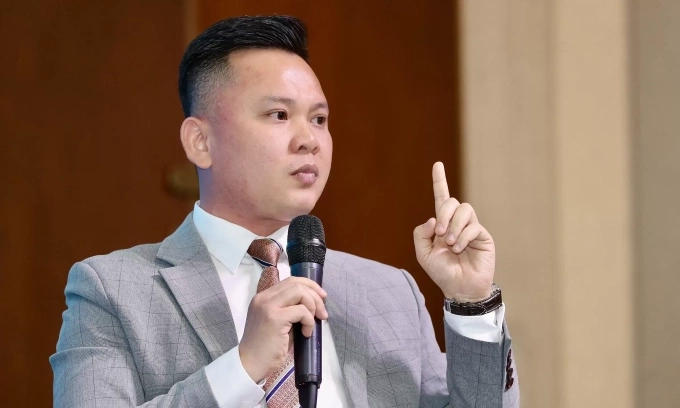
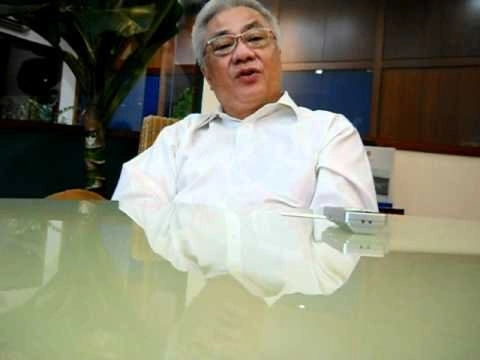
Han Keen Juan, executive chairman of Old Chang Kee. Screenshot taken from Youtube |
Pursuing a strategy of gradual expansion, the brand grew to 12 outlets across Singapore by 1991 while its sales turnover climbed to S$1.6 million from S$700,000 in 1987. By 2008, it was selling 35,000 curry puffs a day, up from just 700 in its early years.
For the financial year ended March 2025, Old Chang Kee posted net profits of nearly S$11.4 million on revenues of S$102 million, according to its annual report.
But the journey was not all smooth sailing. Han faced challenges right off the bat, with the lease having only six months remaining and the landlord hiking the rent five-fold after he took over the business.
“The jump almost killed (Old Chang Kee),” he recalled in a recent interview with The Business Times.
Han pressed on knowing he had little choice but to make the business succeed.
 |
|
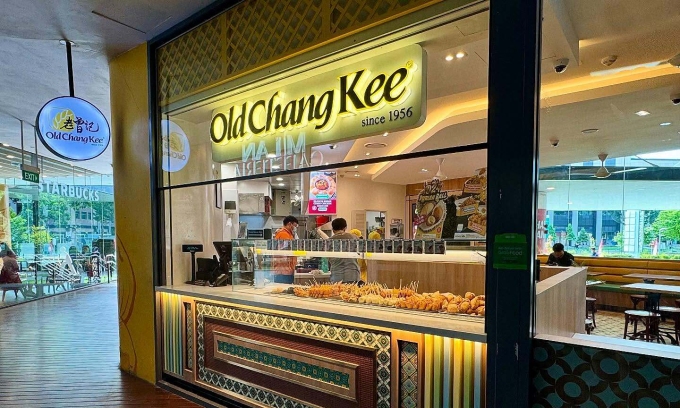
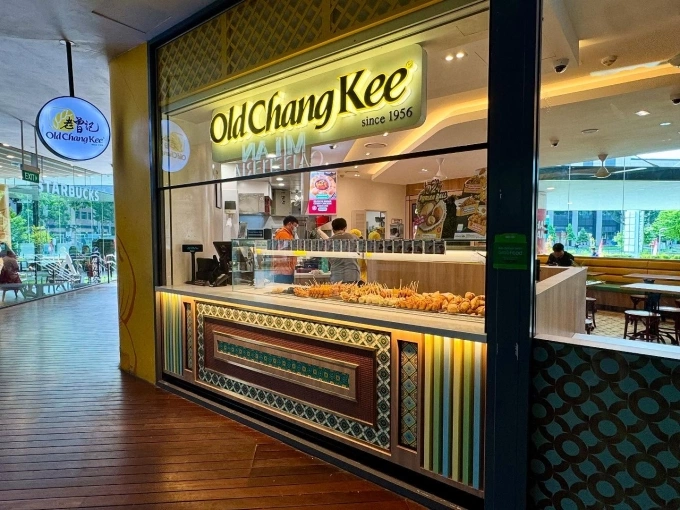
An Old Chang Kee outlet. Photo from Facebook/Old Chang Kee Singapore |
As Old Chang Kee expanded overseas, franchise outlets popped up in Malaysia, Indonesia, China and Japan by 1993 and in Myanmar, South Africa, India and New Zealand by 1997.
The rapid growth, however, proved difficult to sustain and overseas franchisees began struggling with falling sales and increasing complaints over product quality and consistency. In 2002, Han decided to withdraw all overseas franchises, taking a loss of S$50,000.
The company later renewed its international ambitions with a more cautious approach and now operates over 100 outlets worldwide, including in the UK, Indonesia and Malaysia, according to The Edge Singapore.
Han now favors measured growth for the brand’s overseas expansion, particularly in Southeast Asian markets where the company has a better understanding of local consumers.
Throughout the years, Curry’O, the brand’s beloved fried curry puff, has remained its key product even as it has broadened its menu with more items and several location-exclusive and festive offerings.
Even the Curry’O puff recipe itself has evolved over time to reflect changing consumer tastes in Singapore.
Continually refreshing the menu, according to Han, keeps the brand relevant and appealing to younger customers and families.
 |
|
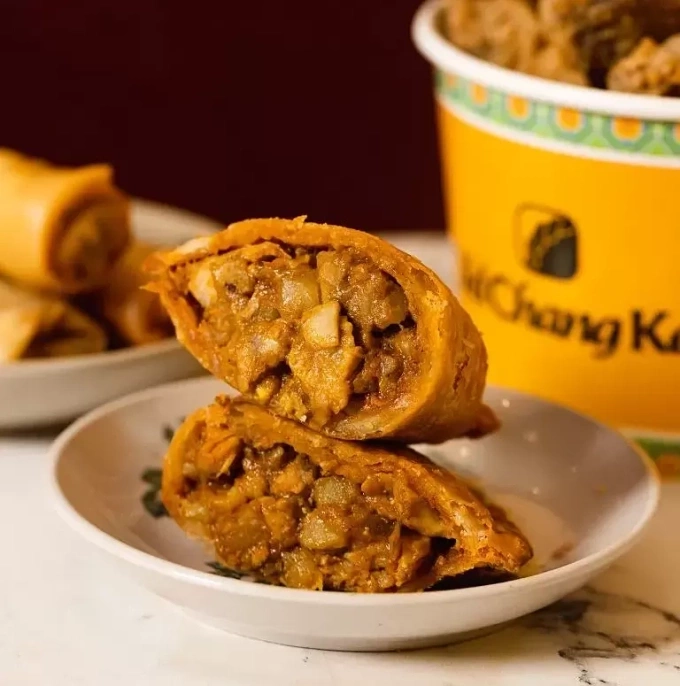
Old Chang Kee’s curry puff. Photo from the company’s website |
Han Keen Juan credits branding for helping Old Chang Kee gain recognition and systems for enabling its expansion, but says the business could not have succeeded without its employees. He has also pushed back against the notion that the business was built by him alone.
And when it comes to handing tasking to his employees, Han prefers to give them room to experiment and make decisions within their scope.
He told Mothership in a 2021 interview: “If you want the person to excel and step up, but you’re trying their hands behind their back, how are they going do that?
“So I often tell them, as long as it’s good for the company, go ahead and do it. Even if things go awry, but you set out with good intentions, […] it’s okay.”
On handling the challenges that come from different economic environments, Han says: “We don’t cry over the challenges; we sit down and think how to overcome it.”