Indonesia is accelerating efforts to reduce its dependence on the U.S. dollar by expanding its local currency transaction (LCT) framework, with transaction values surging by 163% in the opening months of 2026.
Total LCT transaction value reached $8.45 billion in January and February, a sharp increase from $3.21 billion in the same period last year, according to the Indonesian government data. User participation has also risen significantly, surpassing 14,600 by February, with monthly averages exceeding 16,000, well above 2025 levels.
 |
|
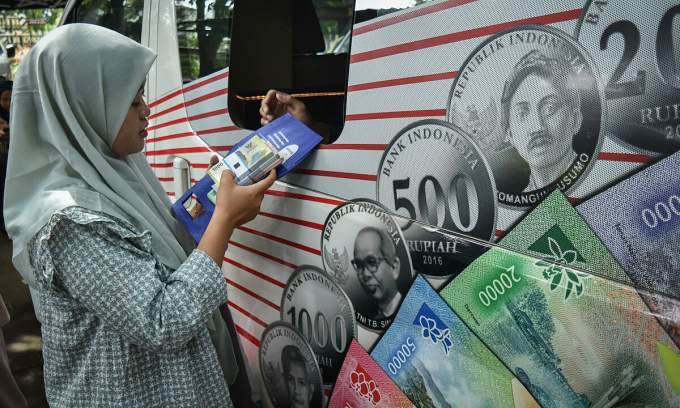
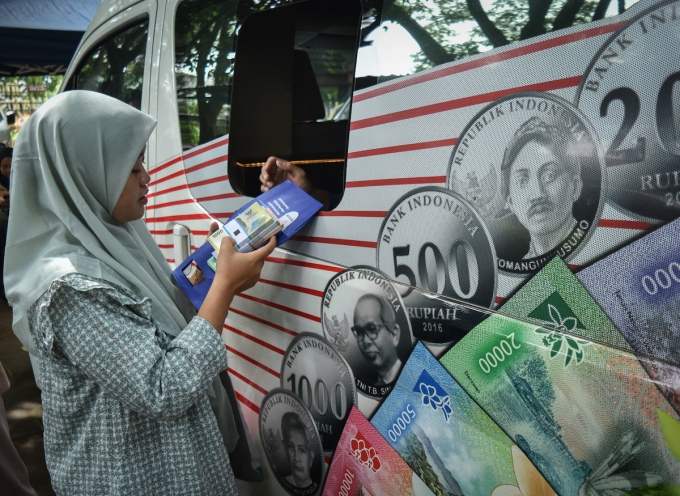
A resident exchanges small change Rupiah at Bank Indonesia’s mobile banking unit in a city park in Malang, East Java, Indonesia, on February 19, 2026. Photo by NurPhoto via AFP |
Ferry Irawan of the Coordinating Ministry for Economic Affairs said that since its launch in 2018, the LCT mechanism has steadily expanded across key sectors, including manufacturing, energy, transport, trade and services. He described it as a vital tool for strengthening the rupiah and supporting real economic activity.
Indonesia has now broadened LCT implementation with six key partners – Malaysia, Thailand, Japan, China, the Republic of Korea and the United Arab Emirates – through bilateral agreements promoting the use of local currencies in trade settlements.
Officials noted that Indonesia’s trade structure is well suited to expanding LCT, as several of its major trading partners do not primarily rely on the U.S. dollar.
To further accelerate implementation, the government has established a national task force on local currency usage, comprising 10 ministries and agencies, tasked with enhancing policy coordination and promoting the use of domestic currency, particularly in import-export activities.