
Domestic fundamentals remain solid as markets reassess global risk, with Middle East tensions causing volatility.
 |
According to Dragon Capital, February’s data suggests Vietnam’s growth momentum remains intact despite seasonal distortions around the Lunar New Year. Industrial activity and business sentiment continued to strengthen, while inflation remains contained, preserving policy flexibility. However, global markets, including Vietnam, have since experienced a sharp increase in volatility following the escalation of the Iran conflict in early March, shifting near-term investor sentiment even as Vietnam’s underlying macro trajectory remains on track.
Industrial activity remained a key pillar of growth. The Index of Industrial Production (IIP) rose 1 per cent on-year in February, bringing year-to-date (YTD) growth to 10.4 per cent on-year, led by manufacturing and processing at 11.5 per cent.
Business sentiment also strengthened, with the Purchasing Managers’ Index rising to 54.5 and business confidence reaching a 41-month-high, signalling that firms are seeing sustained demand and may be preparing for further expansion. Inflation remained well contained, with the consumer price index averaging 2.9 per cent on-year for the first two months, preserving policy flexibility and supporting stable financial conditions.
Domestic demand also remained firm. Retail sales and services revenue increased 7.9 per cent on-year in the first two months, with February alone rising 8.5 per cent on-year. Seasonal spending during the Lunar New Year holiday supported activity in apparel, accommodation, food services, and travel, underpinning the continued recovery of services and steady household consumption.
Investment and external activity continued to support growth. Total trade turnover reached $155.7 billion YTD, up 22.2 per cent on-year, with exports rising 18.3 per cent on-year to $76.36 billion. Import demand also remained firm, reflecting continued purchases of intermediate goods and production inputs as industrial activity expanded, which suggests manufacturers remain confident in near-term order flow.
Realised foreign direct investment disbursement reached $3.21 billion YTD, up 8.8 per cent on-year, with manufacturing continuing to attract the majority of foreign capital. Fiscal dynamics remained supportive, with state budget revenue reaching approximately $22.9 billion in the first two months of 2026, up 13.1 per cent on-year, helping preserve room for continued growth supportive spending.
Equity markets were relatively stable during the shorter trading month. With only 15 trading sessions due to the holidays, the VN-Index recorded a gain of 2.4 per cent on-month in USD terms. Liquidity eased slightly to $1.2 billion around the holiday period but remained healthy relative to historical averages, supported primarily by domestic participation.
Foreign investor activity was mixed, although intermittent net-buying sessions continued to appear. Investor attention remained focused on companies linked to industrial expansion and structural policy themes, while state-owned enterprises continued to attract interest following the government’s reform agenda under Resolution 79. That pattern suggests investors are still rewarding areas of the market most closely tied to cyclical recovery and policy execution.
Dragon Capital noted that February’s data reinforces the resilience and breadth of Vietnam’s growth trajectory. Manufacturing remains the anchor of expansion, while services activity, consumption, and investment flows continue to strengthen.
If industrial momentum persists and inflation remains contained, policy conditions should remain supportive, allowing the equity market’s focus to shift increasingly towards earnings delivery and the gradual return of foreign investor participation. That said, the escalation of tensions in the Middle East introduces external risks and potential volatility, particularly through energy prices, global risk sentiment, and FX pressures.
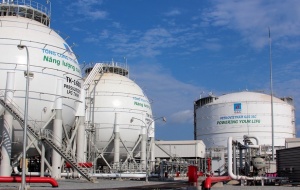 |
Middle East tensions set to test VN-Index, boost energy stocks
Escalating Middle East tensions are rattling global energy markets, but analysts say several stock groups could outperform even as broader indices face short-term volatility. |
 |
US-Iran conflict affecting asset prices
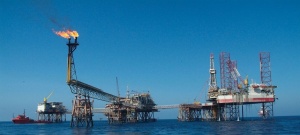
In light of the US – Iran conflict, gold and the US dollar are emerging as short-term safe havens, while cryptocurrencies and stocks are seen as carrying higher risk, according to securities firm VnDirect. |
 |
Iran war to modestly impact Vietnam
The US-Iran war is expected to have a modest impact on Vietnam, but a sharp rise in global oil prices could lift inflation and weigh on growth if tensions persist, according to VinaCapital. |