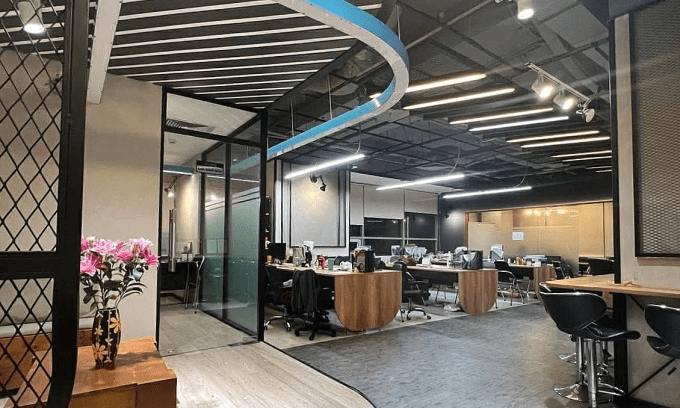
Thanh Giong Computer decided to allow 20% of its staff, mostly in research and development, sales and customer support, to work from home from mid-March.
“This is one of several measures introduced by the management board immediately after the Middle East conflict broke out,” R&D director Lai Hoang Duong said.
The conflict has entered its fifth week and the Strait of Hormuz remains closed, driving energy prices higher and putting pressure on the cost of goods, services and consumption.
At noon Thursday the prices of popular gasoline variety RON95 and diesel increased to VND25,150 (US$0.95) and VND40,820 per liter.
This marked a rise of nearly 25% for the former compared to the end of February, while diesel prices have more than doubled.
Prime Minister Pham Minh Chinh has called on the nation to adopt energy-saving measures. The Ministry of Industry and Trade has encouraged companies to allow employees to work remotely where possible to reduce travel and transportation demand.
Last week Sacombank began adopting flexible working arrangements for staff at its head office.
Depending on job requirements, employees can choose to work at the office or online, but must commit to achieving productivity and complying with information security regulations.
5S Media, a company in the communications and advertising sector, is allowing all employees to work online every Wednesday.
Its director, Hang Pham, said if productivity is unaffected, the company would continue with the policy over the long term rather than just as a response to rising fuel prices.
 |
|
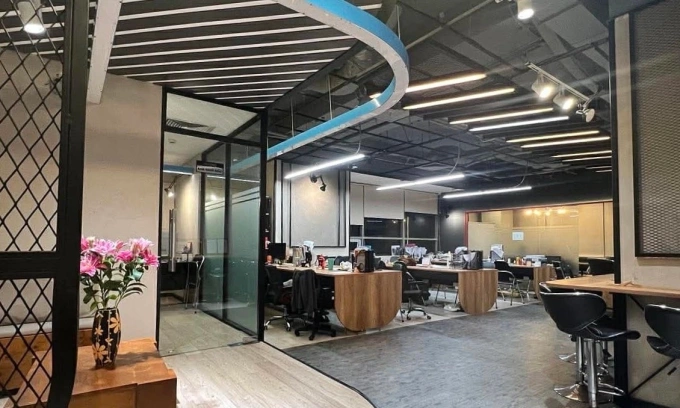
The office of 52 Media is seen deserted on April 1, 2026 as remote work is initiated ever Wednesday. Photo by Hang Pham |
HCMC-based advertising company Project Pluto, which had allowed employees to work from home for four years, told them to return to office only last February.
But withing two weeks it returned to remote working as fuel prices soared. A company spokesperson pointed out that in the creative sector employees do not have “to sit in the same place.”
In addition to saving fuel costs, remote work also reduces office electricity consumption and other expenses, he added.
The work-from-home model has also been adopted by some manufacturing businesses. Viet Uc Seafood Group allows back-office staff, who account for about a third of its workforce, to work flexibly.
“We cannot fully implement a work-from-home model, but must reassess how work is organized to reduce operational pressure as energy costs rise,” a spokesperson said.
Viet Uc estimates that if energy prices push operating costs beyond a certain threshold, it will adopt further measures to reduce travel and increase the proportion of employees working online.
As energy prices climb, many companies are paying employees fuel allowances. Tech firm VNG’s headquarters, which is located in the Tan Thuan Export Processing Zone, requires many employees to commute long distances each day.
The company has yet to begin remote work, but has developed flexible and remote working plans to be activated when needed.
Tran Xuan Ngoc Thao, director of human resources and communications, said VNG offers employees VND300,000 a month for fuel. Outdoor advertiser Unique pays VND500,000, including to probationary employees.
Thanh Giong Computer reimburses 10% of employees’ fuel expenses, and pays delivery and technical staff VND100,000 for every 100 km they travel. Duong added this support would be maintained until the fuel market stabilizes.
Other companies are studying ways to optimize delivery routes and increase the use of fuel-efficient vehicles over the long term.
Many businesses have installed solar panels to save on energy costs, and are considering green mobility to reduce dependence on fossil fuels.
Developing countries in Southeast Asia, including Vietnam, could see GDP pared by 0.6–2.3% and inflation rise by up to 3% due to the Middle East conflict, the Asian Development Bank warned in a recent report.
It recommended that countries should manage energy demand by encouraging remote or flexible work, organizing car-free days in urban areas and generally reducing fuel consumption.