After rejecting foreign overtures and independently developing manufacturing technology, Cao Thi Ngoc Dung has led Phu Nhuan Jewelry to the forefront of Vietnam’s jewelry industry.

She is the chairwoman of a company with a market capitalization of over US$1 billion. She says she never set out to simply trade gold; her ambition was to build the foundation for a modern jewelry industry that could elevate Vietnam on the global stage.
Under her leadership, PNJ became the first Vietnamese company to build an international standard jewelry workshop, train professional goldsmiths and build a brand based on design and innovation.She has won multiple domestic and international awards.
At 68, she remains active, continuing to inspire the next generation of Vietnamese entrepreneurs. On the occasion of the 50th anniversary of Vietnam’s reunification (April 30), VnExpress sat down with the “iron lady of Vietnamese jewelry” to discuss her business journey and philosophy.
– In 1988, at 31, you were assigned to lead the Phu Nhuan Precious Metals Store – now PNJ – when Vietnam had no real jewelry market. How did you manage?
– Two years after the launch of doi moi (Vietnam’s economic reforms in 1986), HCMC began piloting gold trading as a legal business. At the time I was head of planning at a food company, and the state tasked me with establishing and managing the store.
I had no background in jewelry and barely understood the market, and so I hesitated. But a leader told me: “No one understands this market yet. Just apply your business experience and do what you’ve always done.”
With that encouragement and a pioneering mindset, I took the plunge.
Gold trading was tightly controlled then, mostly conducted through the black market. Jewelry artisans mostly worked without official recognition or regulation. When the government allowed gold businesses to open, many state-run firms partnered with private shops to leverage their capital and know-how.
I chose to go it alone.
– Why did you choose to go it alone?
– From the start I was determined to build an industry centered on craftsmanship, not just commerce.
Many private gold shop owners cared only about trading. But true artisans, the heart of the industry, were overlooked. I believed a strong jewelry sector must be built around them.
At the time I was still a state official and Party member. I told the Phu Nhuan District Secretary: “If you choose me, let me choose the direction.
“I will manage it like a private business under state oversight. If approved, I will accept. If not, I must decline.”
He agreed. I began inviting artisans to join me, learning the craft from them as I organized professional training programs. By 1988–89 we had formed a team of professional goldsmiths.
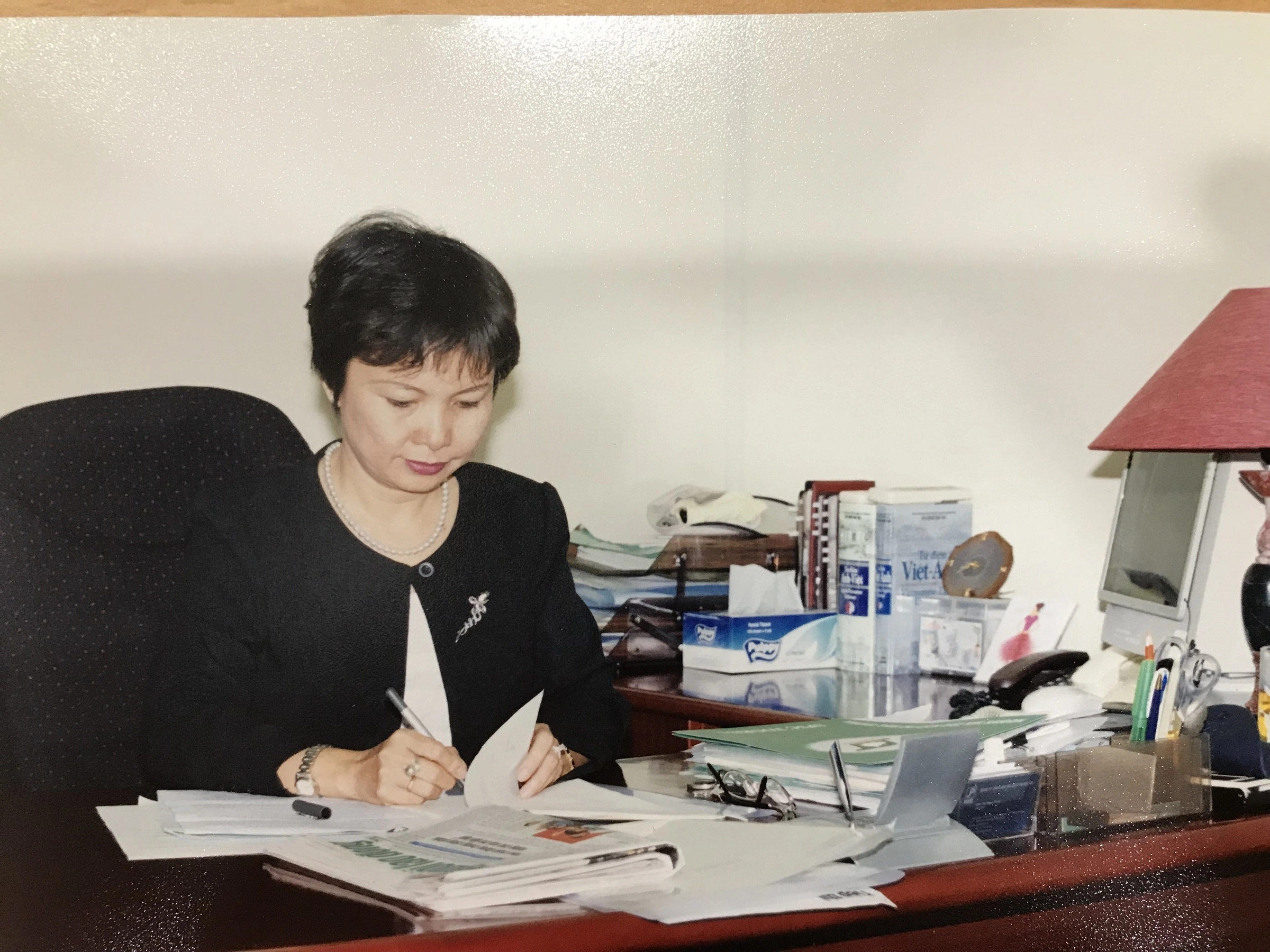
– In 1992, PNJ was chosen to create a joint venture with an Australian jewelry company. Why did you reject the deal?
– We were introduced through the State Bank of Vietnam and city officials. After extensive discussions and planning, I proposed we visit their facility in Australia before signing.
Before the trip I went to Singapore and happened to meet a businessman in the jewelry sector. He introduced me to a machinery supplier, which gave me a basic understanding of jewelry production equipment. Then I traveled to Australia with district chairman Mai Quoc Binh and a State Bank official.
At the Australian facility, I closely observed their operations and realized we could replicate them. A discussion with a Vietnamese engineer there confirmed my thinking as he helped me understand that the technology was not overly complicated.
Combined with what I had observed in Singapore, it became clear to me that this was within reach. Jewelry production relies on meticulous craftsmanship, a strength of Vietnamese artisans. No matter how advanced technology becomes, skilled hands remain essential.
Their proposed contract required 70% of the output to be sold in Vietnam and only 30% for export, showing they were focused on our domestic market, not international growth.
My goal was the opposite: to make PNJ a global exporter. They also demanded a US$120,000 technology transfer fee, a significant sum at the time. I thought, “Why pay for something we can learn to do ourselves?”
I told Binh: “Let’s postpone the signing and invite them to renegotiate. We can do this on our own.” He agreed. That decision changed everything.
– How did you move forward after returning to Vietnam?
– I began researching and investing in technology. Although international travel was not easy at the time, I found ways to access the latest global advancements. I studied documents, met with equipment suppliers from Germany and Italy, and learned how modern factories operated.
In 1992 I submitted a proposal to establish an industrial-scale jewelry plant. In 1993 we imported machinery, recruited precision mechanical engineers and began training our workforce. By year-end our first products were on the market. It was the result of a long and difficult journey, one without any formal blueprint for industrial jewelry production.
A turning point came in 1995, when the World Gold Council entered Vietnam. Regional director Albert Cheng took me on study tours to Indonesia, Malaysia and other countries to observe their business models. It was a difficult yet formative period for PNJ.
Rejecting the joint venture taught me that if others can do it, so can we – with perseverance. Sustainable growth requires self-reliance in technology and production.

– How did consumers react to PNJ’s industrial jewelry?
– It was tough at first. Vietnamese buyers were unfamiliar with mass-produced jewelry. Our early products, though made with Italian machinery, needed quality improvements.
We initially sold our products wholesale, but retailers marketed them as imported goods and raised prices as Vietnamese consumers still favored foreign brands.
I recall once seeing a woman at the airport wearing a necklace I recognized. She said her husband had bought it abroad, but I knew it was from PNJ. That moment was eye-opening.
Without branding, even high-quality products remain anonymous. We immediately began building our retail system and brand.
Starting in 1995, we ramped up marketing with support from the World Gold Council. That affirmed my belief: product quality is vital, but branding is essential.
In 2004 PNJ was fully privatized under a government directive to divest from non-core state-owned enterprises.
This gave us more flexibility to expand, invest in technology and enhance our competitiveness.
– What has been PNJ’s greatest challenge? What lessons did you take from it?
– The toughest time was between 1992 and 1995 as we transitioned from a small workshop to an industrial factory. We had to streamline operations, boost efficiency and shift from gold bullion to jewelry retail. It was a difficult decision, but with collective resolve and long-term vision, we overcame the challenge.
Now, 2025 has proven even more difficult than the Covid period. We face rising material costs and a slowdown in consumer spending, while the global jewelry market is also contracting. Our goal is to reduce losses and perform better than the market average.
The key lesson is to remain calm. When hardship strikes, do not panic or avoid it. Analyze the root of the issue, then solve it. Worrying only clouds judgment.
Every company will face crises. But these are also opportunities for breakthroughs. If success were easy, everyone would achieve it. I have never backed down from any challenge.

-What are your top takeaways after 37 years of building PNJ?
Four things stand out. Firstly, clear goals. Our aim from day one was to develop Vietnam’s jewelry sector. That clear direction helped us attract committed, capable people.
Secondly, perseverance. Early investment in manufacturing was grueling. I was nearly disciplined for years of losses. I felt disheartened seeing other countries remaining far ahead. But Cheng encouraged me, saying: “You’re on the right track. They’ve had decades. You’ve just started.” That kept me going.
Today PNJ leads Vietnam’s jewelry industry and is respected across Asia. That is the reward for staying the course.
TThirdly, long-term vision. I accepted short-term losses. Without a long-term view, PNJ could never have reached VND30 trillion (US$1.2 billion) in revenues and VND2 trillion in profits in 2024.
I am proudest of the fact that we laid the foundation for Vietnam’s modern jewelry industry, and, more importantly, proved that Vietnamese businesses can thrive on their own strengths.
Lastly, corporate culture. Sustainable companies require strong values, transparency, social responsibility, and constant innovation.
– What advice would you give young entrepreneurs amid Vietnam’s sweeping reforms?
– Today’s young entrepreneurs have many advantages. They are well-trained, digitally savvy and globally connected.
However, some lack boldness. My generation had no choice but to take risks. Today’s youth tend to overthink, which leads to missed opportunities. Business often demands speed and a willingness to act before everything is perfect.
Vietnam and the world are entering a new era, one as pivotal as the early days of doi moi. It is a moment for young people to be dynamic, creative and daring. If they seize the opportunity, many could rise, perhaps even become billionaires. If not, they risk falling behind.
– Today, you are no longer involved in day-to-day operations, but instead focus on strategic direction, corporate governance and developing the next generation of leadership at PNJ. How are you preparing the company for this transition?
– This is not just about replacing management. It is a long-term journey to build a team aligned with PNJ’s values and culture.
We have focused on developing mid-level managers, helping them identify and correct blind spots in thinking and skills.
At PNJ, we value integrity over skills. A person scoring 6 or 7 in capability is acceptable because skills can be improved. But when it comes to ethics and cultural fit, we require 8 or 9.
– How do you feel about titles like “Female General,” “Iron Lady” and “Powerful Leader”?
– I do not pay attention to titles.
What I take pride in is being an influential leader, someone who has helped change how businesses are built, inspired others and left a lasting legacy. Real leadership is about creating value for the next generation, not holding power.
– Though you have stepped back from day-to-day operations, you still attend strategy meetings and mentor leaders. How do you maintain a work-life balance?
– When you do what you love and create value, it does not feel like pressure. People see me working constantly, but I find joy and purpose in it. Balance does not have to mean staying home on weekends. It can mean meeting other businesswomen, sharing knowledge and helping them grow – that too is balance.
I also enjoy reading, anything I can get my hands on. I read daily, often several times a day. I also practice yoga, walk or jog on weekends, and meet friends when I can.

Content by Le Chi – Tat Dat
Photos by Thanh Nguyen
Graphics by Hoang Khanh – Tat Dat